Zuckerberg's Congressional Gauntlet: Is This the Beginning of the End for Meta's Reign?
"Mark Zuckerberg once again faces the Washington firing squad, this time over social media's impact on children. Behind the performative outrage and political theater lies a brutal reality: the erosion of trust, the looming threat of serious regulation, and the slow, agonizing realization that the unchecked dominance of the tech giants may finally be waning. This hearing is not just about kids; it's about the future of the internet and who controls it."
Key Takeaways
- •Tech CEOs face increased scrutiny on Capitol Hill, highlighting growing concerns about social media's impact on children.
- •The hearings represent a crucial juncture for tech companies, potentially leading to regulatory changes and shifts in industry power.
- •The future of the internet is being debated, impacting everything from consumer behavior to innovation and the balance of power.
The Lede: Smoke and Mirrors in the Capitol
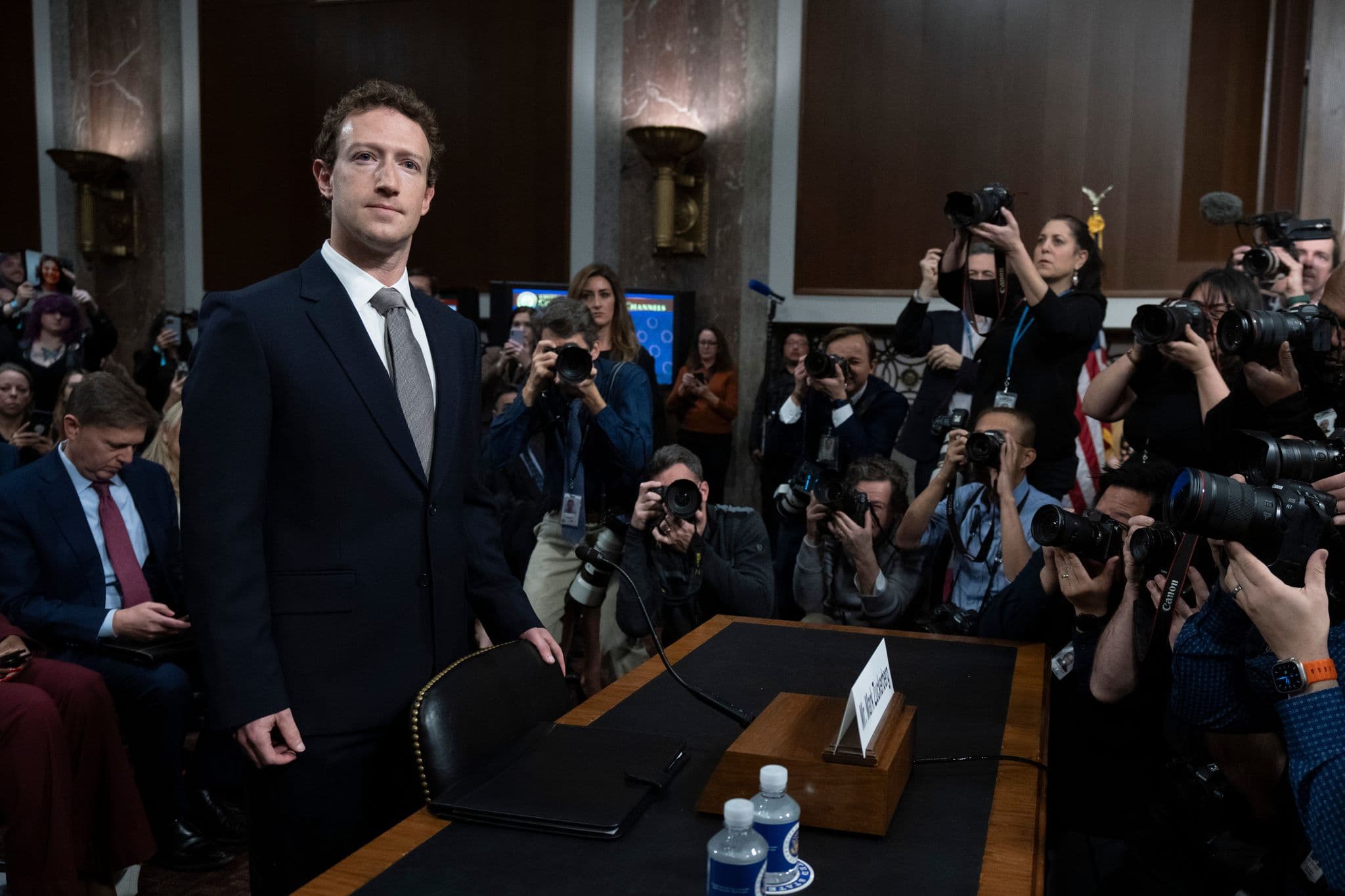
The ornate hearing room, with its hushed expectancy and the omnipresent glare of C-SPAN cameras, felt less like a seat of governance and more like a carefully orchestrated theater. Mark Zuckerberg, his face a mask of carefully calibrated composure, sat before the congressional committee. This wasn’t his first rodeo. The man, the myth, the architect of a digital empire, was once again being grilled, this time about the alleged harms his platforms inflict upon the most vulnerable members of society: children. Outside, the news cycle spun, a vortex of breathless headlines and pundit pronouncements. Inside, the real story unfolded, a complex ballet of power, politics, and the relentless pursuit of profit.
The air crackled with a tension that was almost palpable. The politicians, many of whom were nearing retirement age, represented a generation that didn't grow up with Instagram, Facebook, and TikTok. Yet, they held the keys to potential regulatory Armageddon for Zuckerberg and his ilk. Each question, delivered with the practiced gravitas of seasoned orators, was a thinly veiled weapon, aimed at extracting concessions, exposing vulnerabilities, and ultimately, securing political points. Zuckerberg, in turn, offered carefully crafted platitudes, deflections, and the occasional, almost imperceptible, flicker of defiance. The world watched, and the stakes were higher than ever.
The Context: A History of Digital Reckoning
To understand the current crisis, one must journey back to the genesis of this digital age. The story begins, not with benevolence or innovation, but with the raw, untamed hunger for growth. Early social media platforms, fueled by venture capital and the naive belief in the power of connection, were designed to be addictive. Algorithms were crafted to maximize user engagement, and the attention economy was born. As users scrolled, liked, and shared, a relentless feedback loop was established. The goal? To capture as much of our time and data as possible.
The seeds of today's crisis were sown in the early days. The companies, driven by a philosophy of 'move fast and break things,' often prioritized expansion over ethical considerations. Data privacy was an afterthought. The mental health of young users, barely considered. The pursuit of profit trumped all else. As the platforms grew, so did the potential for misuse. Trolls, bots, and purveyors of misinformation thrived, exploiting the very tools designed to connect us. And the consequences, as we are now seeing, are coming home to roost.
Facebook’s Cambridge Analytica scandal was a seismic event, a blunt awakening for many. It exposed the vast troves of user data that tech companies had accumulated and the vulnerability of democracies to manipulation. This moment should have been a reckoning, a turning point. Instead, it was a speed bump. The companies were forced to apologize, make minor adjustments, and then continued their relentless march forward.
The focus on children wasn’t an accident. It was the predictable outcome of a business model designed to maximize attention, regardless of the cost. Children, with their developing brains and insatiable curiosity, were the perfect targets. The platforms became playgrounds, incubators of influence, and, in some cases, conduits for harm. It was a perfect storm, and Mark Zuckerberg, the architect of this digital realm, was now standing squarely in its eye.
The Core Analysis: Money, Metrics, and Manipulation
Let's talk numbers. Meta's revenue, driven primarily by advertising, is astronomical. Facebook and Instagram are cash cows, but the growth has slowed. The company is investing heavily in the metaverse, a costly and uncertain gamble. The stock price has been volatile, and the pressure to deliver returns is immense. This context is critical to understanding Zuckerberg’s actions. Every decision, every strategic maneuver, is viewed through the prism of shareholder value and market capitalization.
The hearings are not just about the children. They're about the battle for the future of the internet. The government, spurred by both public pressure and the desire to curb the tech giants’ power, is now threatening to impose serious regulations. These range from stricter data privacy laws to limitations on targeted advertising, even the potential for breaking up large tech companies.
The core of the problem lies in the algorithms. The algorithms are designed to keep users engaged, feeding them content that is likely to generate emotional reactions, including fear, anger, and outrage. This is how the platforms make money: the longer people stay on the platforms, the more ads they see, the more money the companies make. The price of this revenue stream is immense. The social fabric is fraying; mental health crises among young people are soaring; and disinformation is eroding trust in institutions.
Zuckerberg's strategy, like that of other tech CEOs, is one of defense. He knows the political landscape has shifted. The pendulum is swinging, and the era of unfettered expansion is coming to an end. His goal is to delay, deflect, and buy time. To fight tooth and nail to retain as much control as possible. The hearings provide a stage for the carefully choreographed dance of denial and damage control. Any public admission of guilt will be a huge strategic blunder and will serve as evidence to the politicians hunting for blood.
Consider this: Zuckerberg's responses and his carefully constructed image are all part of the game. He's playing for time, hoping that the tide will turn. He's also betting that the regulators, hampered by their lack of technical expertise and the powerful lobbying efforts of the tech industry, will fail to enact meaningful reforms. It's a high-stakes gamble, but he has little choice. Surrender is not an option.
The winners in this scenario are the lobbyists, the lawyers, and the PR firms who are being paid handsomely to navigate the treacherous waters of Washington. The losers are the children, the victims of online bullying, and the broader society which is paying the price for the addictive power of social media. The hidden agenda is simple: preserve the status quo. The more powerful the tech companies become, the more influence they wield.
The "Macro" View: Reshaping the Digital Landscape
These congressional hearings are a watershed moment. They represent a fundamental shift in the relationship between the tech giants and the government. They're the opening salvo in what is likely to be a prolonged and messy battle over the future of the internet. The impact will be felt across the entire industry. This is not just about Facebook or Instagram. It is about how the whole internet functions.
The potential for government regulation is substantial. Antitrust lawsuits could be filed to break up the tech behemoths. Stricter rules on data privacy could be implemented. There will be limitations placed on targeted advertising, and the algorithms which drive the platforms will come under intense scrutiny. The industry, once accustomed to operating with minimal oversight, must now adapt to a new reality.
The hearings also raise fundamental questions about the nature of free speech, the role of social media in our society, and the responsibility of tech companies to protect their users. These questions will not be easily answered. They are, at their core, philosophical, legal, and technological.
This shift echoes the moment in the 1990s when Microsoft faced its antitrust reckoning. Just like the Microsoft of old, Meta's dominance is under threat. The stakes are immense, and the consequences will be far-reaching.
The impact will extend beyond policy. Consumer behavior will change. There will be increased skepticism of social media platforms. There will be a growing demand for privacy and for greater control over personal data. Consumers may seek out alternative platforms that prioritize privacy, security, and ethical behavior.
The most significant impact will be on the innovation landscape. Venture capitalists will think twice before pouring billions of dollars into ventures that operate in the gray zone, or businesses which will be easy targets for regulatory oversight. The tech landscape will be changing, and changing dramatically.
The Verdict: A Future Forged in Fire
My prediction? Zuckerberg’s reign will not end tomorrow, but the cracks are now undeniable. The long march to regulatory oversight has begun. His ability to operate with impunity, to shape the internet on his terms, is coming to an end. The company will be forced to make concessions, to change its business practices, and to accept a level of government scrutiny it has never before experienced.
**Within One Year:** Expect a flurry of new regulations. Expect a significant pushback from the tech companies. Expect more congressional hearings, more media coverage, and more public outrage. Meta will likely be hit with substantial fines. The company will restructure its business, with a focus on child safety. Expect to see new features, designed to protect young users, and to gain the support of the public.
**Within Five Years:** Meta will face legal challenges. The company will be forced to make significant changes to its algorithms and its business model. The company will be less dominant. New players will emerge in the social media space, offering alternative platforms that prioritize privacy and ethics. The tech landscape will be more fragmented and more competitive. The age of unbridled growth will be over.
**Within Ten Years:** The entire landscape will have been reshaped. Regulations will be in full effect, and the impact will be felt across the industry. The power of the tech giants will have been substantially diminished. Public trust in social media platforms will be restored, but changed. The internet will be a safer, more equitable place. Mark Zuckerberg's legacy will be complex: the architect of an incredible innovation, who also helped usher in an age of social and ethical dilemmas, the echoes of which will reverberate for generations.
The curtain falls. The hearing ends. The show goes on. The game of power, politics, and profit continues. And we, the audience, are left to contemplate the future. One thing is certain: the digital world is changing, and the tectonic plates beneath our feet are shifting.
Sources & further reading
Related analysis
- Amazon's Ascent: Navigating the Tides of Triumph – A Veteran's Guide to Playing the Stock
- Silicon Valley's Red Flag: Laura Loomer's Nvidia Assault – Is Jensen Huang's China Connection the Next Tech Scandal?
- Microsoft's Masterstroke: Why Wall Street Is Blind to the True Value of MSFT (And Why That's Their Advantage)
- Data Center Gold Rush: Why Infrastructure Construction Stocks Are the Only Game in Town
- Nomura's Walmart Exit: A Canary in the Coal Mine for Retail's Future?
- Jabil's AI Infrastructure Gamble: A High-Stakes Bet on the Future or a Mirage of Growth?