Seoul's Silent War: The Chasm Between SK Telecom and KT – And the Future of Korean Telecom
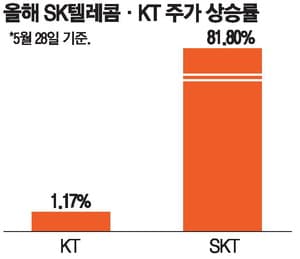
"The widening stock price gap between SK Telecom and KT is more than a market fluctuation; it's a seismic shift in the Korean telecom landscape. This isn't just about market share; it's a battle for the very soul of connectivity, driven by ambition, innovation, and a ruthless pursuit of dominance. Prepare for a decade of disruption as the titans clash."
Key Takeaways
- •SK Telecom's early embrace of 5G and strategic partnerships is driving its success.
- •KT faces a critical need to adapt and innovate to remain competitive.
- •The widening gap between the companies signals a significant shift in the Korean telecom landscape.
The Lede: A City Held Breathless
The Seoul skyline, a shimmering tapestry of steel and glass, offers no hint of the silent war raging beneath its surface. But if you know where to look – to the trading floors, the hushed boardrooms, the clandestine meetings over soju and gogi-gui – you can feel it. The tremor. The tension. The widening chasm between SK Telecom and KT, the twin pillars of Korea's telecommunications empire. Their stock prices, once locked in a tense dance, now tell a story of diverging fortunes, a narrative of triumph and, perhaps, the slow, agonizing decline of a once-unrivaled giant.
This isn't just a business story; it's a cultural one. These two companies are interwoven into the fabric of Korean life, connecting the nation's obsessions: K-pop, gaming, relentless economic growth. They've powered the chaebols, fueled the digital revolution, and shaped the way Koreans live, work, and connect. The gap in their stock prices isn’t merely a financial metric; it’s a reflection of deeper currents, of strategic brilliance and missteps, of the relentless churn of innovation, and the brutal realities of a market in constant flux.
Picture this: It's a crisp autumn morning in Seoul. The sun catches the glint of the Han River. Inside the gilded halls of SK Telecom, the mood is one of quiet confidence, perhaps even a touch of smugness. The trading numbers are in, and the gap, once a whisper, is now a roar. Across town, in the more understated, almost stoic offices of KT, there’s a different atmosphere. A gathering of senior executives, faces etched with a mix of concern and steely resolve. The numbers don't lie. The market is speaking. And the message is clear: the balance of power is shifting. This is the story of how and why.
The Context: From Humble Beginnings to Digital Titans
To understand the current divergence, you must first travel back in time. Both SK Telecom and KT have deep roots, tracing their origins back to the very dawn of Korean modernization. KT, formerly Korea Telecom, emerged from the ashes of the Korean War, initially a government-owned entity tasked with rebuilding the nation’s communications infrastructure. It was the lifeline, the thread that connected a shattered nation. SK Telecom, on the other hand, began as a mobile subsidiary of SK Group, a chaebol that built its empire on energy and chemicals. From the outset, SK Telecom possessed a different DNA: ambitious, agile, and willing to embrace the disruptive potential of wireless technology.
The early years were a race for market dominance. KT, with its established infrastructure and government backing, held the initial advantage. But SK Telecom, sensing the future, poured resources into mobile technology, betting big on a future where smartphones, not landlines, would rule. This was a critical divergence. While KT was burdened by legacy infrastructure and bureaucratic inertia, SK Telecom was lean, hungry, and driven by the entrepreneurial spirit that defined its chaebol parent. This, in essence, was the foundation of the current divide.
The late 1990s and early 2000s witnessed a period of blistering growth. Korea became a global leader in mobile technology, a testament to the foresight and aggressive investment of both companies. But the strategies began to diverge again. SK Telecom doubled down on innovation, pushing the boundaries of 3G and, later, 4G technology. They were early adopters of cutting-edge technologies like 5G and were always looking for the next big thing, the next market trend, the next technological breakthrough to capture the imagination of the world. They were willing to take calculated risks. KT, meanwhile, navigated a more cautious path. While they continued to invest in their network, they were hesitant to fully embrace the disruptive potential of new technologies, and, crucially, struggled to integrate them with the overall strategy. The core culture differed. SKT was always a step ahead of the innovation, whereas KT followed the trend, usually trailing by a step or two.
Key moments shaped this evolution. The acquisition of Hynix by SK Telecom provided them with chip-making capacity which was ahead of its time. The constant, sometimes risky, investments in 5G infrastructure, and the innovative approach of SKT in content and media partnerships, provided them with greater market share. KT's struggles to launch a competitive digital media platform and their stumbles in the mobile payment space were some of the missed opportunities that set them back. These decisions, viewed from today's perspective, look like crucial turning points, tipping the scales in favor of SK Telecom.
The Core Analysis: Numbers, Narratives, and Hidden Agendas
Let's cut through the corporate jargon and delve into the hard numbers. The stock price gap is not an accident; it is a direct consequence of a series of strategic choices, market dynamics, and, perhaps, a touch of pure luck. The market capitalization tells the tale: SK Telecom has consistently outperformed KT, reflecting a higher valuation and investor confidence. This performance is fueled by several factors:
1. Innovation and Future-Proofing: SK Telecom’s early and aggressive embrace of 5G, and the resulting technological superiority, has been a key differentiator. They’ve built a network that isn’t just fast; it’s forward-thinking, ready to handle the demands of the metaverse, AI, and the Internet of Things. Their investments are ahead of the times. Their focus is not just on the present, but the next wave of technological innovation. KT, while investing in 5G, has lagged in network deployment and, more importantly, in the development of compelling use cases to attract consumers and build long-term value.
2. Diversification and Strategic Partnerships: SK Telecom has broadened its scope beyond core telecom services. They are deeply involved in content creation, streaming services, and digital media partnerships. They understand that the future of telecom is not just about pipes; it's about the content that flows through them. These strategic partnerships have given them a significant edge in the crowded media space. KT, meanwhile, has struggled to diversify beyond its traditional core business, and their digital media platforms have not gained sufficient traction to compete effectively. They have not moved fast enough in the digital age.
3. Management and Execution: SK Telecom has, on the whole, been better at executing its strategic vision. Their management teams have shown a greater ability to anticipate market trends, adapt to change, and capitalize on opportunities. They’re not afraid to take risks. They seem to understand that the speed of innovation is key. KT, while capable, has sometimes been bogged down by internal bureaucracy, a more conservative approach to risk-taking, and a perceived lack of agility. They often seem reactive, not proactive, and are not innovative enough. The speed of decision-making and execution is critical in this industry.
4. Market Sentiment: The market is, in essence, a voting machine. Investor sentiment is a powerful force, and it reflects a belief in SK Telecom's long-term prospects. This is fed by a combination of factors: consistent financial performance, a strong brand reputation, and a perception of innovative leadership. The market believes in the future potential of SKT, and the management's actions back this up. The perception is that KT is just another telecom company, which in the eyes of the stock market is less valuable. KT needs to make radical changes, and its time is running out.
However, the numbers only tell part of the story. Beneath the surface, there's a fascinating game of strategy and corporate maneuvering. The future is uncertain for both companies, the competition for the new generation is real. The question of whether either can compete with the tech giants such as Google, Apple, and Amazon remains open. SK Telecom faces pressure to maintain its lead, while KT faces the challenge of adapting to a rapidly changing digital landscape.
The Macro View: Reshaping the Korean Telecom Landscape
The gap between SK Telecom and KT isn’t just a localized phenomenon. It’s a harbinger of broader trends shaping the entire Korean telecom landscape. The shift in power will have profound implications:
1. Consolidation and Competition: Expect to see more consolidation within the industry. The weaker players will be forced to merge, acquire, or be acquired. This will lead to a new era of intensified competition. The battle is no longer simply between two companies. The digital giants will enter the picture, and competition will come from all sides. Expect the government to step in to create fairness and encourage innovation.
2. Investment and Innovation: The winners will pour resources into the next generation of technologies. Expect investments in artificial intelligence, virtual reality, and the metaverse. The losers will be forced to cut costs, which will ultimately reduce innovation. Innovation will be key to survival, and the market will reward those who embrace it and punish those who do not.
3. The Customer Experience: Telecom companies will be compelled to focus more on the customer experience. The future is about more than just bandwidth. It's about providing seamless, personalized services, from entertainment to gaming to smart-home solutions. Customers will demand a better experience, and companies that don't innovate to meet the demands of their customers will fall behind.
4. The Future of Work and Play: The telecom sector will play an increasingly vital role in shaping how Koreans work, play, and connect. The technologies developed will impact the whole nation. The digital infrastructure will determine who succeeds, and who falls behind. The winners will invest in these new technologies, the losers will get left behind.
The implications are far-reaching. The industry is in a state of flux, and the impact will be felt across the entire economy, from entertainment and commerce to education and healthcare. The decisions made today will shape the Korean economy for decades to come.
The Verdict: Crystal Ball Gazing – A Long-Term Forecast
So, what happens next? My crystal ball, honed by decades of covering this volatile sector, offers the following predictions:
1-Year Outlook: SK Telecom will maintain its lead. Expect continued market share gains, driven by the rollout of new 5G services and successful partnerships. KT will struggle to close the gap, facing internal restructuring and a search for a new, transformative strategy. The market will continue to reflect this divergence, but KT will start to show signs of improvement with internal restructuring.
5-Year Outlook: The battle for the future will intensify. SK Telecom will solidify its position as a leading technology player, diversifying its portfolio beyond telecommunications. They’ll likely make key acquisitions in the AI and metaverse space. KT will face a critical juncture, needing to make bold decisions to survive. A merger with a smaller player, or a significant strategic pivot, will be essential for their survival. Expect a new CEO at the helm of KT by this time.
10-Year Outlook: The Korean telecom landscape will be unrecognizable. The lines between telecom, technology, and media will blur. SK Telecom, if it plays its cards right, will become a global force. KT, however, faces a high risk of being relegated to a secondary role, potentially acquired by a larger player, or forced to focus on its core infrastructure business. The winners will be those who adapt, innovate, and embrace the future. The losers will be those who cling to the past. The gap will become a canyon.
This moment echoes the late 1990s, when Apple, struggling and on the brink of collapse, brought back Steve Jobs. His laser focus, his obsession with design and customer experience, and his willingness to take risks, reshaped the company, and, ultimately, the entire tech industry. KT needs a similar transformation. A leader that can see the future and have the boldness to execute it. The stakes are too high. The future of Korean technology depends on it.
The story of SK Telecom and KT is a tale of innovation, ambition, and the relentless pursuit of dominance. It's a story that’s still being written, a drama that unfolds every day on the trading floors and in the boardrooms of Seoul. The battle is on, the future is uncertain, and the only constant is change.
Sources & further reading
Related analysis
- Amazon's Ascent: Navigating the Tides of Triumph – A Veteran's Guide to Playing the Stock
- Silicon Valley's Red Flag: Laura Loomer's Nvidia Assault – Is Jensen Huang's China Connection the Next Tech Scandal?
- Microsoft's Masterstroke: Why Wall Street Is Blind to the True Value of MSFT (And Why That's Their Advantage)
- Data Center Gold Rush: Why Infrastructure Construction Stocks Are the Only Game in Town
- Nomura's Walmart Exit: A Canary in the Coal Mine for Retail's Future?
- Jabil's AI Infrastructure Gamble: A High-Stakes Bet on the Future or a Mirage of Growth?