Nadella's Delhi Dance: A Tech Titan's Tango with Adani Amidst Accusations – A High-Stakes Gamble or a Strategic Imperative?
"Satya Nadella's recent Delhi rendezvous with Gautam Adani, the Indian tycoon facing US fraud allegations, is more than a casual meet-and-greet. It's a calculated chess move, a bet on India's burgeoning digital frontier, and a potential compromise of Microsoft's meticulously crafted image. This meeting signals a tectonic shift in the tech-geopolitics power balance, forcing a reevaluation of ethical boundaries in the pursuit of global dominance."
Key Takeaways
- •Microsoft's strategic alliance with Adani is a high-stakes gamble on the Indian market and Adani's legal future.
- •The meeting highlights a shift in tech's geopolitical dynamics, with Western firms aggressively pursuing opportunities in emerging economies, even with reputational risks.
- •This partnership could reshape the global tech landscape, influencing how Western companies approach emerging markets and potentially eroding ethical standards.
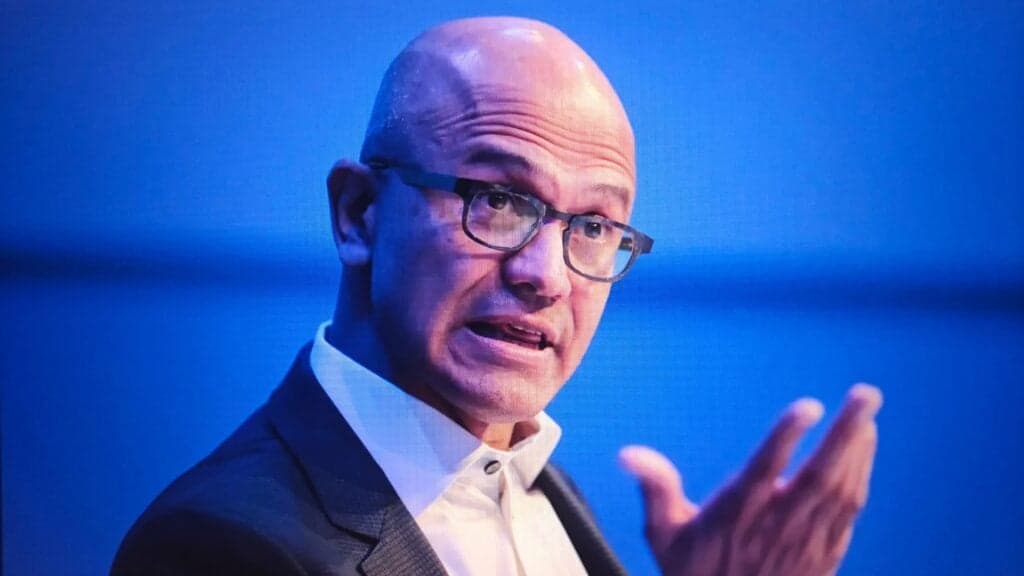
The air in Delhi hung thick with the monsoon's promise, a humid blanket that clung to the tailored suits and hushed whispers. Inside the palatial Adani Group headquarters, the tension was palpable, a finely tuned instrument vibrating with the weight of billions. Satya Nadella, the cerebral architect of Microsoft's resurgence, sat opposite Gautam Adani, the Indian infrastructure magnate whose empire, once a beacon of unbridled ambition, now cast a long, shadow of suspicion. The meeting, whispered about in closed-door boardrooms and on the gilded balconies of the world's financial centers, was more than just a courtesy call; it was a high-stakes deal with an uncertain outcome.
The Lede: A Meeting of Titans, A Clash of Values
The scene was a tableau of contrasting forces. Nadella, the soft-spoken technocrat, representing the pinnacle of American innovation, met Adani, the self-made billionaire, whose relentless rise had redefined the contours of Indian business. The backdrop: a US investigation, alleging fraudulent practices, that threatened to unravel the foundations of Adani’s sprawling conglomerate. This wasn’t just a meeting; it was a collision. A collision of ambition and reputation, of technological prowess and infrastructural might, of the West’s regulatory rigor and the East's pragmatic embrace of opportunity. The stakes? Billions in future contracts, the strategic dominance of India's digital ecosystem, and the ever-present specter of reputational damage.
The whispers started weeks before. Sources close to Microsoft, speaking on the condition of anonymity – the lifeblood of investigative journalism – hinted at a potential partnership, a strategic alliance that would leverage Adani's massive infrastructure footprint to propel Microsoft's cloud services and digital ambitions across India. This was the 'golden ticket' – a market poised for explosive growth, with a young, tech-savvy population and a government eager to embrace digital transformation. But the price of entry was steep. It meant aligning with a figure whose integrity was under the microscope, whose name was etched in the annals of alleged financial misconduct. 'Always A Benzinga' – the cryptic phrase, a nod to market sentiment, seemed to underscore the precarious nature of the partnership.
The Context: From Humble Beginnings to Global Ambition
To understand the gravity of this meeting, one must rewind the clock. Gautam Adani’s journey is the stuff of legend, a testament to the transformative power of Indian entrepreneurship. From a diamond sorter to a port magnate, he built an empire, encompassing coal mines, power plants, airports, and data centers. He became a symbol of India's economic ascent, a visible manifestation of the 'India Shining' narrative. Simultaneously, Satya Nadella had been navigating Microsoft's metamorphosis. Replacing the often abrasive Steve Ballmer, he had ushered in an era of empathy, cloud computing, and strategic agility. Microsoft, under his stewardship, had become a behemoth, a global powerhouse.
The alliance with Adani wasn't a sudden whim; it was a strategic imperative, a piece of the puzzle to secure the tech giant’s influence in a strategically important market. India, with its burgeoning middle class, its relentless drive for modernization, and its vast pool of tech talent, represented a prize too significant to ignore. The government’s 'Digital India' initiative provided the perfect catalyst, a framework for public-private partnerships that promised exponential growth. Microsoft, with its cloud infrastructure (Azure), its software ecosystem, and its proven track record in partnering with governments globally, was ideally positioned to capitalize.
However, the narrative began to unravel with the release of a damning report by Hindenburg Research, an American investment firm specializing in short selling. The report accused Adani of stock manipulation, accounting fraud, and a complex web of shell companies designed to inflate his company's value. The allegations sent shockwaves through the financial markets, wiping billions off Adani Group's market capitalization and raising serious questions about the integrity of his operations. The US Department of Justice launched investigations, piling the pressure on the already beleaguered tycoon. Against this backdrop, Nadella's meeting took on an entirely different meaning.
The Core Analysis: Strategy, Psychology, and the Money
The meeting itself was a study in strategic positioning. Nadella, with his background in engineering and his penchant for data-driven decisions, would have meticulously analyzed the risks and rewards. His advisors, the strategic masterminds who guide Microsoft’s global expansion, would have weighed the potential benefits – access to Adani’s infrastructure, a foothold in a key market – against the undeniable risks – the reputational damage, the regulatory scrutiny, the potential for financial loss. The psychological aspect is equally compelling. The encounter between the two men was a delicate dance of power and perception. Adani, fighting to rehabilitate his image, needs to be seen as a viable partner, a player worthy of trust and investment. Nadella, on the other hand, needs to project strength, to demonstrate that Microsoft is unafraid to make bold moves, even in the face of controversy.
The money, of course, is the driving force. The Indian market is vast and potentially lucrative. Securing deals with Adani’s group gives Microsoft a competitive edge over its rivals, such as Amazon, Google, and Oracle, all competing for a slice of the pie. Adani, despite the negative press, controls critical infrastructure assets – ports, power grids, and data centers – that are essential for cloud expansion. For Microsoft, these assets are the keys to unlocking the Indian market. The unspoken expectation is that the deal will provide the Adani Group with a veneer of respectability, while giving Microsoft unparalleled reach.
The strategic implications are far-reaching. By aligning with Adani, Microsoft is essentially betting that the allegations against him will not lead to significant legal or financial repercussions. It is a calculated gamble that could pay massive dividends, or it could backfire spectacularly. It would involve navigating complex geopolitical waters, where the lines between business and politics are often blurred, and where perceptions of ethical conduct vary greatly. What they’re both doing is building a long term bet, the outcome of which is unknown.
The Macro View: Reshaping the Global Tech Landscape
This single meeting, a seemingly isolated event, reverberates far beyond the confines of the Adani Group headquarters. It is a microcosm of a larger trend: the increasing convergence of business and geopolitics. As nations vie for economic supremacy, technology becomes both the battlefield and the prize. The meeting between Nadella and Adani reflects a broader shift in the global tech landscape. Western tech giants, faced with slowing growth in established markets, are aggressively seeking opportunities in emerging economies. India, with its enormous population, its rapidly growing digital economy, and its strategic location, is at the forefront of this push. This means negotiating with potentially questionable entities. The meeting shows a compromise, for the sake of profit and dominance.
Microsoft’s move reflects a pragmatic approach, where the pursuit of growth often trumps concerns about ethical alignment. But it also raises fundamental questions about the role of tech companies in the 21st century. Should they be solely focused on profits, or do they have a moral obligation to uphold certain standards? The answer, as the Nadella-Adani meeting suggests, is complex and nuanced. The meeting can also be read as a signal, a warning, or a green light, to other tech firms about the new rules of the game. If Microsoft can partner with Adani, other companies will feel less restrained and more willing to follow suit. This will, inevitably, lead to the erosion of Western standards in the pursuit of opportunity. The next decade will see a fierce scramble for market share, with companies operating with far less moral baggage.
The implications are not limited to India. This event will influence the way Western companies approach other emerging markets, especially those with questionable governance and practices. The old playbook, which often prioritized ethical considerations, may be rewritten. In the years to come, we can expect to see increased tolerance for corruption, ethical compromises, and a willingness to partner with figures and entities that would have previously been deemed untouchable. The implications of Nadella’s decision are profound, shaping the business environment for years to come.
The Verdict: A High-Stakes Bet with an Uncertain Future
My seasoned observation, with decades of experience under my belt, is that this meeting is a high-stakes gamble with an uncertain future. Microsoft, in its pursuit of market dominance, has decided to place a significant bet on the resilience of the Indian economy and the ability of Gautam Adani to weather the storm of accusations. In the next year, we can expect the relationship to become even more public. We can anticipate joint ventures, strategic partnerships, and a flurry of announcements designed to signal confidence and momentum. The risks, however, will remain. The US investigation will continue, and the scrutiny from the media, regulators, and competitors will be intense.
In five years, assuming the Adani Group successfully navigates the legal challenges, the Microsoft-Adani partnership could be a resounding success. Microsoft will have established a dominant position in the Indian cloud market, generating billions in revenue and solidifying its leadership in the global tech ecosystem. However, this rosy scenario is not a given. There’s a chance the allegations against Adani will be proven, resulting in crippling fines, legal battles, and reputational damage. In that case, Microsoft will have to sever its ties, incurring significant financial losses and suffering a major setback to its expansion plans.
Looking ten years out, the legacy of this meeting will be a stark reminder of the evolving nature of business in the digital age. It will serve as a case study, teaching future generations about the delicate balance between ethical considerations and strategic imperatives. This will forever be known as the 'Nadella-Adani Dilemma'. Will it be hailed as a brilliant move, a masterstroke of strategic genius? Or will it be remembered as a miscalculation, a moment of moral compromise that damaged Microsoft's reputation and undermined its long-term prospects? The answer, as always, lies in the unfolding drama of the next decade, with the outcome being nothing less than the reshaping of the global digital order.
Sources & further reading
Related analysis
- Amazon's Ascent: Navigating the Tides of Triumph – A Veteran's Guide to Playing the Stock
- Silicon Valley's Red Flag: Laura Loomer's Nvidia Assault – Is Jensen Huang's China Connection the Next Tech Scandal?
- Microsoft's Masterstroke: Why Wall Street Is Blind to the True Value of MSFT (And Why That's Their Advantage)
- Data Center Gold Rush: Why Infrastructure Construction Stocks Are the Only Game in Town
- Nomura's Walmart Exit: A Canary in the Coal Mine for Retail's Future?
- Jabil's AI Infrastructure Gamble: A High-Stakes Bet on the Future or a Mirage of Growth?