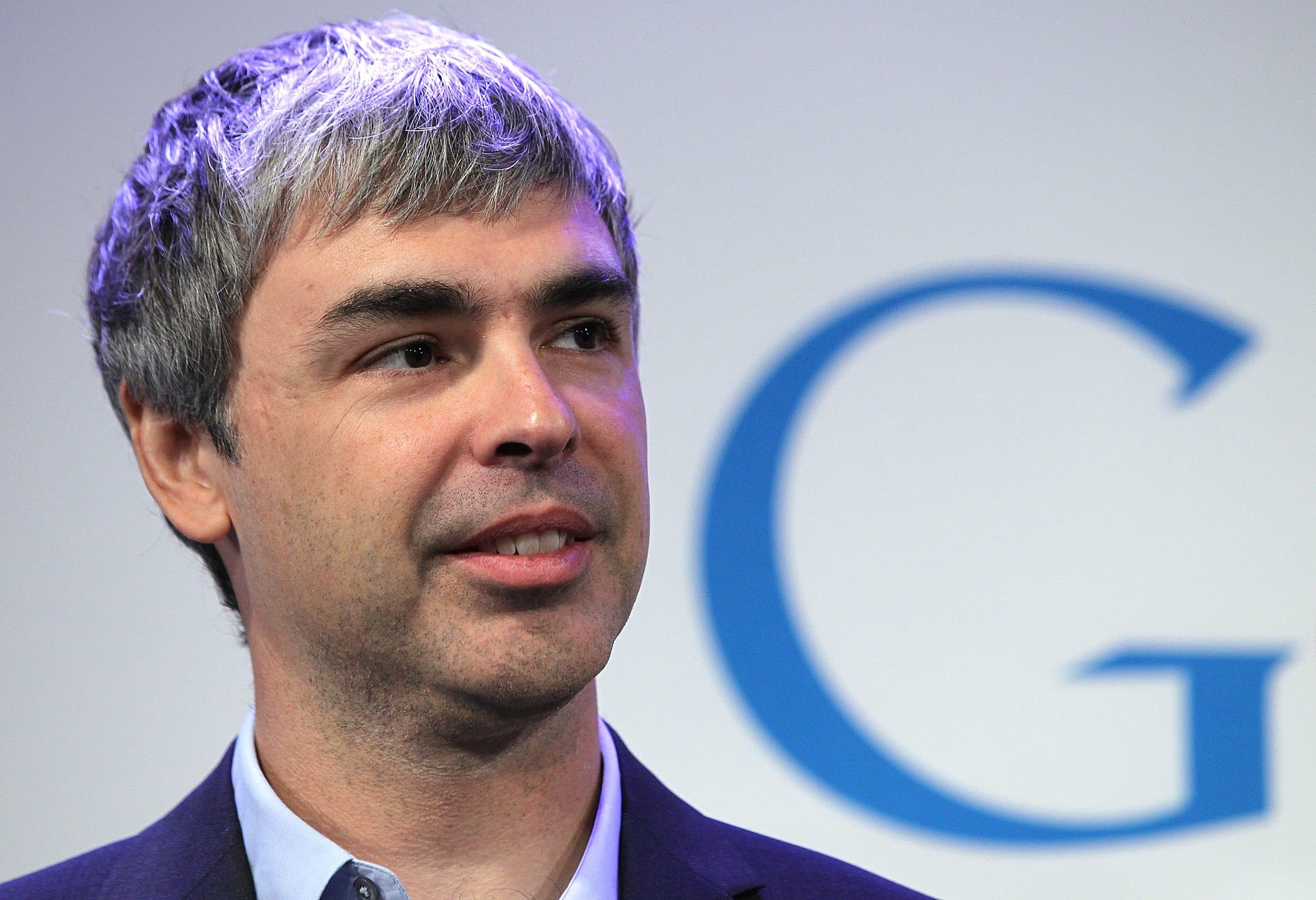
Larry Page's Escape from California: A Billionaire's Exodus Signals a Tech Reckoning
"Larry Page, co-founder of Google, is quietly shifting his assets and operations away from California, a move that echoes the silent departure of titans before him. This isn't just a tax play; it's a strategic realignment, a bet on the future, and a devastating indictment of the Golden State's current trajectory. Expect a ripple effect, as other tech leaders reassess their allegiance, triggering a monumental shift in the industry's epicenter."
Key Takeaways
- •Larry Page is quietly moving assets out of California, signaling a strategic shift by a tech titan.
- •The exodus is driven by high taxes, regulations, and a deteriorating quality of life in California.
- •This move will reshape the tech industry landscape, creating new centers of innovation and challenging Silicon Valley's dominance.
The Pacific sunset paints the sky in hues of defiant orange and bruised purple, a daily spectacle that has, for decades, served as the backdrop for Silicon Valley’s relentless pursuit of innovation and wealth. But on the horizon, a different kind of storm is gathering. It's a storm not of weather, but of wealth – specifically, the exodus of that wealth from the state that birthed it. This isn't just about taxes or political squabbles; it’s a high-stakes chess match with the future of the tech industry as the board. And Larry Page, the enigmatic co-founder of Google, is making his move.
The Silent Departure
While Jensen Huang, CEO of Nvidia, may publicly express his openness to a billionaires' tax, a different narrative is unfolding behind closed doors. Sources close to the situation, speaking on condition of anonymity (because, let's face it, nobody wants to cross a billionaire directly), confirm that Larry Page has been quietly, methodically, and decisively moving assets and operations out of California. This isn't a headline-grabbing relocation of headquarters; it’s a far more subtle and strategic dismantling of his Californian footprint.
It's a move that should send shivers down the spines of California's political and economic elite. Because when a visionary like Page, who quite literally reshaped the way the world accesses information, starts to disengage, it's a canary in the coal mine. It's a signal that the cost-benefit analysis of being in the Golden State has shifted dramatically. And, let's be blunt, it’s a sign that the gilded age of California as the undisputed tech capital may be coming to an end.
The Context: From Glory to Gloom?
To understand the magnitude of this moment, we must rewind the tape. California, for decades, has been the promised land. Its fertile ground has nurtured giants: Apple, Google, Intel, Facebook (now Meta). The state fostered a culture of risk-taking, of relentless innovation, and, perhaps most importantly, of tolerance for extreme wealth. It's a culture that has now, arguably, become a victim of its own success.
The seeds of this departure were sown long ago, in the very soil that fueled the Valley's growth. The state's tax regime, always a point of contention, has become increasingly burdensome. The regulatory environment, once viewed as a minor inconvenience, has morphed into a complex web of restrictions that stifle innovation and increase costs. And the cost of living? Forget about it. The astronomical housing prices, the relentless traffic, the increasingly visible social unrest – these factors are not just annoyances; they are existential threats to the very workforce that powers the tech engine. As Page has calculated, it's not worth it to remain a high-profile target.
The seeds were watered by political winds, the ever-increasing regulations, and social instability. The straw that broke the camel's back? No single thing, but a gradual realization: California is no longer the optimal environment for the continued growth and prosperity of the companies and their founders.
The Core Analysis: The Numbers Don't Lie
Let's get down to brass tacks. While the precise details of Page's financial maneuvers are shrouded in the typical veil of privacy, several indicators point to a decisive shift. Real estate holdings are being liquidated or transferred. Key employees are being encouraged to relocate to states with more favorable tax climates. Investments are being redirected. The focus is not just on personal wealth preservation; it's on strategic diversification and future-proofing the Google empire.
The primary driver, of course, is money. The high marginal tax rates in California, coupled with the potential for increased taxes on capital gains and unrealized gains (the dreaded “billionaires tax” that Huang is supposedly fine with), make California an increasingly unattractive place to park vast fortunes. But the motivation extends beyond simple tax avoidance. Page, a notoriously private individual, is likely wary of the political climate, the rising tide of populism, and the potential for increased scrutiny from regulators and the media. His wealth has made him a target, and the spotlight, as anyone who has been in the industry for as long as I have knows, can be blinding.
The winners in this scenario are the states that offer a more hospitable environment. Texas, with its zero-income tax policy and business-friendly regulatory climate, is the obvious frontrunner. Florida, with its similar tax advantages and attractive lifestyle, is another strong contender. Nevada, Arizona, and even states further afield are also vying for a piece of the pie. The losers, obviously, are California and its citizens, who will see a decline in tax revenue, a brain drain of talent, and a potential erosion of the state's economic competitiveness.
The hidden agendas are far more subtle. Page, and other ultra-wealthy individuals, see this as an opportunity to reshape the economic landscape. By relocating their wealth and influence, they can exert pressure on states to adopt more business-friendly policies and, in effect, rewrite the rules of the game. It’s a form of economic leverage, a way to ensure that the engine of wealth creation continues to operate in their favor.
The Macro View: A Shifting Tectonic Plate
This is not an isolated event. It’s a symptom of a larger tectonic shift in the industry. The concentration of power and wealth in Silicon Valley has created an increasingly unstable ecosystem. The rising cost of doing business, the intensifying competition for talent, and the growing political and social pressures are forcing companies and individuals to reassess their strategies. The old model, where innovation thrived in a single geographical location, is breaking down.
We are witnessing the beginning of a decentralization of the tech industry. It’s a move that echoes the exodus of manufacturing from the Rust Belt decades ago. The implications are profound. It will reshape the economic geography of the United States, creating new centers of power and leaving others to wither. It will accelerate the trend towards remote work and distributed teams, transforming the way companies operate and the way people live. The world will be more diverse and, for many, more complex.
The next generation of tech leaders will look at this and see not just a challenge, but an opportunity. They will be less tied to the traditional centers of power and more willing to experiment with new models of innovation and growth. They will seek out environments that are conducive to their long-term success, even if it means abandoning the comforts of Silicon Valley. This shift also will affect the stock market, as investors reassess how they evaluate tech companies. The cost of doing business and talent acquisition will play a bigger role in their considerations.
The Verdict: Crystal Ball Gazing
Here’s the cold, hard truth, the prediction from a veteran who has watched the cycles come and go. In the next 12 months, we will see a marked acceleration of this trend. More high-profile tech leaders will follow Page's lead, quietly moving their assets and operations to more tax-friendly and business-friendly environments. California will continue to grapple with the consequences, scrambling to mitigate the damage and attempting to stem the tide. Politicians will issue statements, engage in rhetorical posturing and try to enact last-minute solutions, but the damage will be done.
Within five years, the impact will be undeniable. The Bay Area's dominance as the undisputed tech capital will be significantly diminished. The flow of venture capital will be redirected, and new hubs of innovation will emerge, challenging Silicon Valley's supremacy. The social and economic fabric of California will undergo a significant transformation, as the state struggles to adapt to its new reality. Expect massive real estate collapses, as those who were dependent on the tech boom will suffer.
Ten years from now, the picture will be even clearer. California will still be a major player in the tech industry, but its influence will be diluted. The rise of competing tech ecosystems will have fundamentally reshaped the global landscape. The legacy of Larry Page's departure will be etched in history as the moment the tech titans began their exodus, the moment the golden age began to fade, and the moment a new era of innovation began to unfold.
This moment echoes the late 90s, when Steve Jobs returned to Apple, and the company was on the brink of collapse. The difference? The scale. The stakes. And the potential for a far more dramatic reshaping of the economic landscape. Make no mistake: this is a seismic event. And the aftershocks are only just beginning. Buckle up. The ride is going to be bumpy.
Sources & further reading
Related analysis
- Amazon's Ascent: Navigating the Tides of Triumph – A Veteran's Guide to Playing the Stock
- Silicon Valley's Red Flag: Laura Loomer's Nvidia Assault – Is Jensen Huang's China Connection the Next Tech Scandal?
- Microsoft's Masterstroke: Why Wall Street Is Blind to the True Value of MSFT (And Why That's Their Advantage)
- Data Center Gold Rush: Why Infrastructure Construction Stocks Are the Only Game in Town
- Nomura's Walmart Exit: A Canary in the Coal Mine for Retail's Future?
- Jabil's AI Infrastructure Gamble: A High-Stakes Bet on the Future or a Mirage of Growth?