Huang's Gamble: Nvidia's CEO and the AI Peace Accord That Could Reshape the World
"Jensen Huang, the visionary at Nvidia, is attempting a high-stakes diplomatic play, suggesting a path to AI co-existence between America and China. This isn't just a corporate strategy; it's a bet on the future, one that could either cement Nvidia's dominance or ignite a geopolitical firestorm. The implications are vast, impacting everything from chip supply chains to the very nature of technological power."
Key Takeaways
- •Jensen Huang is advocating for AI cooperation between the U.S. and China amid escalating tensions.
- •Nvidia's strategic position in the AI ecosystem makes Huang's stance a pivotal moment in the industry.
- •The success of this 'Peace Idea' hinges on diplomatic efforts and the willingness of both countries to collaborate.
The air crackles with tension, a digital Cold War brewing in the silicon valleys and research labs of the world. The battleground? Artificial Intelligence, the new oil. And the titans vying for control? America and China, locked in a technological arms race with potentially catastrophic consequences. Then, from the eye of the storm, a voice cuts through the noise: Jensen Huang, the CEO of Nvidia, a man whose chips power the AI revolution. His message, delivered with the quiet intensity of a seasoned strategist, is a call for peace, a 'Peace Idea' as he termed it, between the two superpowers. It is a bold, audacious move, and the world is watching, breathlessly.
The Lede: A Digital Détente?
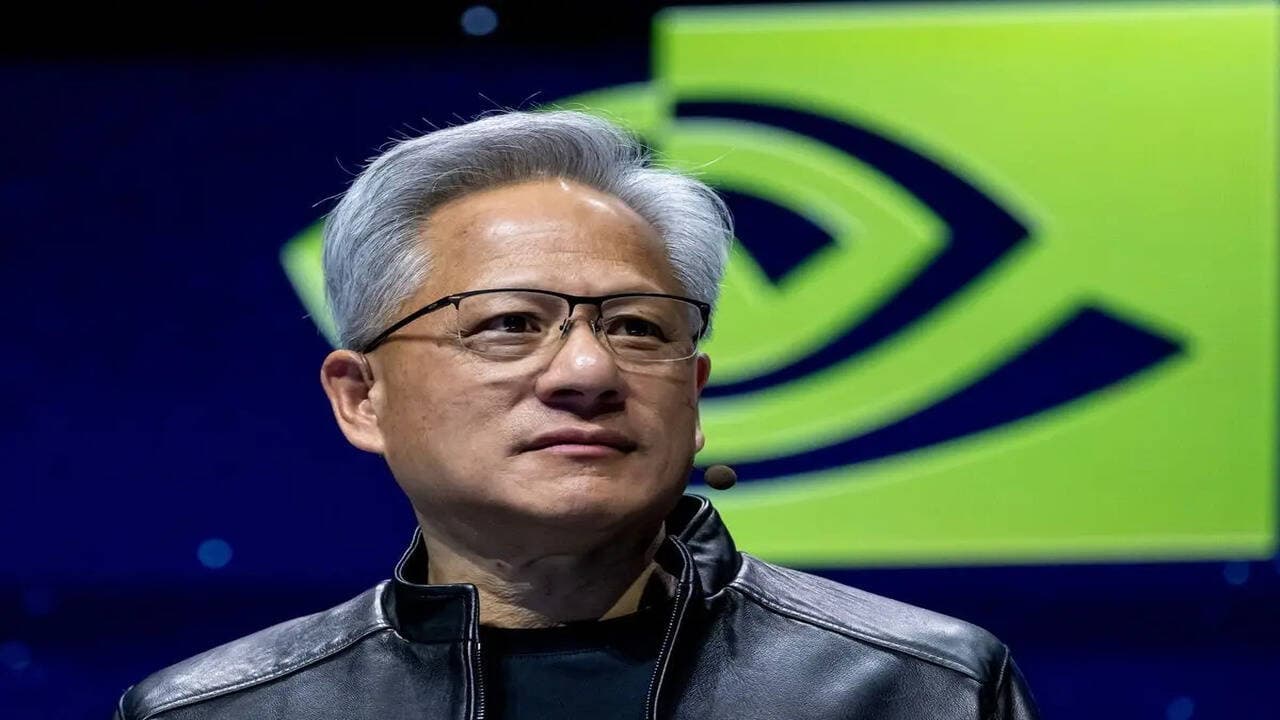
Picture this: a sun-drenched auditorium in Santa Clara, California. The stage is set, bathed in the soft glow of anticipation. Jensen Huang, clad in his signature black leather jacket, strides confidently to the podium. He's not just a CEO; he's a rock star in the tech world, a visionary who built an empire on the back of graphical processing units (GPUs). But today, the conversation isn't about gaming or graphics. It's about something far more profound: the future of AI, and whether that future will be defined by cooperation or conflict. The mere whisper of such a suggestion in the current climate is enough to make the room hold its breath. This wasn't merely a corporate pronouncement; it was a diplomatic overture, a hand extended across the chasm of geopolitical rivalry.
His 'Peace Idea', as reported by The Times of India, wasn't a fully-fledged blueprint, but rather a philosophical stance, a seed planted in fertile ground. It's a recognition of the inherent dangers of an uncontrolled AI arms race, a race that could lead to unforeseen consequences, a technological escalation that risks spinning out of control. It is a moment that echoes the highest stakes imaginable. What Huang is suggesting is a fundamental shift in the global power dynamic, and it could very well define the next decade.
The Context: Seeds of the Present
To understand the magnitude of Huang's pronouncements, we must journey back, tracing the path that has brought us to this precipice. The story of Nvidia is, in many ways, the story of modern computing. Initially, the company was a pioneer in graphics cards, the unsung heroes behind the visual feast that is modern gaming. Huang, a Taiwanese-American engineer, recognized the immense power of the GPU architecture, realizing its potential far beyond pixels and polygons. He saw a future where these processors could be used for far more ambitious and complex computations. And he was right. From the seed of an idea, Nvidia flourished.
The rise of AI changed everything. GPUs, with their ability to handle massive parallel processing, became the engine of the AI revolution. Suddenly, Nvidia wasn’t just a graphics card company; it was a crucial component of the entire AI ecosystem. Its chips became indispensable for training and deploying complex AI models, powering everything from self-driving cars to advanced medical diagnostics. But this very dominance, this strategic advantage, became a source of tension. China, recognizing the transformative potential of AI, launched an aggressive campaign to catch up, aiming to become a world leader in this field. And the U.S., wary of its rival's ambitions, responded with export controls, restricting the flow of advanced chips to China, including Nvidia's cutting-edge products.
This escalating trade war is the backdrop to Huang's peace offering. The restrictions, while intended to curb China's technological advancement, also hurt Nvidia. China is a massive market, and being locked out meant significant revenue losses, but more importantly, a less vibrant market for Nvidia's AI tools. But this is more than just about dollars and cents; it's about the very future of innovation. A fragmented, protectionist world where technology is weaponized isn't a world where AI will flourish. It's a world where progress is stalled, collaboration is stifled, and the potential benefits of AI, such as solving climate change or curing diseases, are jeopardized. So, in many ways, Huang's 'Peace Idea' isn't a political maneuver; it's a pragmatic necessity.
The Core Analysis: The Strategic Calculus
Let's dissect Huang's proposition. What is he really suggesting? And what are the implications of his stance? The core of his message is that cooperation, not competition, is the key to unlocking AI's full potential. He likely recognizes that an all-out technological war will be a pyrrhic victory. Even if the U.S. were to maintain a lead in AI, the collateral damage—the fractured supply chains, the loss of collaborative research, the potential for catastrophic miscalculations—would be devastating. This is an invitation to avoid mutual assured destruction in the technological realm.
First, the economics: Nvidia's fortunes are inextricably linked to both the U.S. and China. China is a massive, and growing, market for its products, and the restrictions imposed by the U.S. are hurting the company's bottom line. The desire for stability is paramount. The 'Peace Idea' could be interpreted as a strategic play to mitigate the risks associated with the trade war. Huang is, essentially, advocating for a return to a more open, collaborative environment. The argument is that if the AI talent can be leveraged in a collaborative effort, everyone benefits. If not, Nvidia and the world suffer.
Second, the geopolitics: Huang's call for cooperation could be seen as an attempt to act as a bridge between the U.S. and China, a trusted voice with the influence to broker a truce in the AI arms race. His appeal is not just to governments but also to the global tech community, urging them to prioritize collaboration over competition. Huang's position as a respected leader in the tech industry gives him significant credibility in the diplomatic arena. He is speaking, essentially, as a representative of an entire industry which stands to profit or lose based on how the situation evolves.
Third, the technological implications: The future of AI hinges on innovation. And innovation thrives in environments of open exchange and collaboration. AI, by its very nature, is a global endeavor. The most groundbreaking AI advancements have often come from cross-border collaborations, from research conducted by teams of scientists from different countries. Huang's plea for cooperation recognizes this fundamental truth. It is a bet that a global, collaborative approach will yield better results, and quicker, than a fragmented, competitive one. A world where each country develops its own walled-off AI systems will be a world with less progress and more risk.
The risks are equally significant. If the call for peace falls on deaf ears, Nvidia risks being caught in the crossfire of the AI arms race. The company could become a pawn in a larger geopolitical game, forced to choose sides, potentially facing further restrictions on its products and operations. But even if the 'Peace Idea' gains traction, there are significant hurdles to overcome. Building trust between the U.S. and China will be a monumental task. The two countries have very different visions for the future of AI. The U.S. may worry about intellectual property theft, cyber espionage, and other issues. Reaching an agreement that satisfies both sides will require considerable diplomatic skill, something well beyond the purview of any single CEO. This is the very definition of a high-wire act.
The Macro View: Reshaping the Landscape
Huang's actions are not happening in a vacuum. This is a moment that could reshape the entire industry landscape. The most obvious impact will be on the chip market. If cooperation becomes the norm, the demand for advanced chips will likely remain high, benefiting companies like Nvidia. The artificial constraints on chip supply will gradually fade. New opportunities will open up. The current tensions have given rise to various new chip companies in China, but those companies struggle to compete with Nvidia. If Huang's plan succeeds, then the pressure will be on those companies to improve their offerings or fade away.
The 'Peace Idea' could also affect the broader tech ecosystem. Collaboration in AI could lead to breakthroughs in areas such as healthcare, climate change, and education. Imagine, for instance, a world where AI-powered medical diagnostics are developed collaboratively, accessible to people around the world. Or a world where AI models are developed to model the effects of climate change. This sort of technological utopia is exactly what Huang may be working toward. A cooperative approach could accelerate the pace of innovation, bringing about profound societal changes.
More broadly, Huang's strategy could set a precedent for other industries facing geopolitical tensions. He could be signaling a move towards a new era of corporate diplomacy. Businesses are increasingly aware that they have a stake in the geopolitical climate, and that their actions can have far-reaching implications. Huang could be showing other CEOs how to navigate the complex world of international relations. The impact could extend beyond the tech sector to manufacturing, finance, and other industries where globalization faces headwinds. This could change the very role of CEOs. No longer will the CEO be expected to simply manage shareholder value. They will also need to master the subtle art of international diplomacy.
The Verdict: Crystal Ball Gazing
So, what happens next? What is the ultimate outcome of Huang's grand gamble? In the short term (the next 12 months), expect continued volatility. The 'Peace Idea' won't be implemented overnight. There will be diplomatic posturing, negotiations, and setbacks. Nvidia's stock will likely experience some ups and downs, reflecting the uncertainty in the market. There will also be fierce debate among policymakers and tech industry insiders. Expect considerable pushback from those who believe the U.S. must maintain a firm stance against China. In particular, government entities, and companies with strong ties to the defense industry, will have reservations.
In the medium term (the next 5 years), the picture becomes clearer. The success of Huang's strategy will depend on the actions of the U.S. and Chinese governments, as well as the cooperation of the tech community. If there is a genuine commitment to collaboration, the AI landscape will transform. Nvidia will continue to thrive, leading the charge in developing and deploying AI-powered solutions. But even if the 'Peace Idea' only achieves partial success, the company is well-positioned to weather the storm. The long-term trend, however, is toward more collaboration, more open markets, and increasing globalization. The pressure to come to terms will be unrelenting.
In the long term (the next 10 years), the world of AI could be unrecognizable. If the trend towards cooperation is established, we could see a golden age of technological innovation. Artificial intelligence will be woven into every aspect of our lives, from healthcare and education to transportation and energy. The global economy will be transformed, driven by AI-powered productivity gains. The ethical considerations will be paramount. And, of course, there will always be challenges to overcome, but a world where the U.S. and China are working together will be much safer than a world where they are at each other's throats. Huang's gamble could ultimately determine whether AI becomes a force for good or a harbinger of global conflict. It is a long shot, yes. But it is a shot worth taking.
Sources & further reading
Related analysis
- Amazon's Ascent: Navigating the Tides of Triumph – A Veteran's Guide to Playing the Stock
- Silicon Valley's Red Flag: Laura Loomer's Nvidia Assault – Is Jensen Huang's China Connection the Next Tech Scandal?
- Microsoft's Masterstroke: Why Wall Street Is Blind to the True Value of MSFT (And Why That's Their Advantage)
- Data Center Gold Rush: Why Infrastructure Construction Stocks Are the Only Game in Town
- Nomura's Walmart Exit: A Canary in the Coal Mine for Retail's Future?
- Jabil's AI Infrastructure Gamble: A High-Stakes Bet on the Future or a Mirage of Growth?