
Oracle's Odyssey: Larry Ellison's Paramount Gambit - A High-Stakes Deal That Rewrites Hollywood's Script
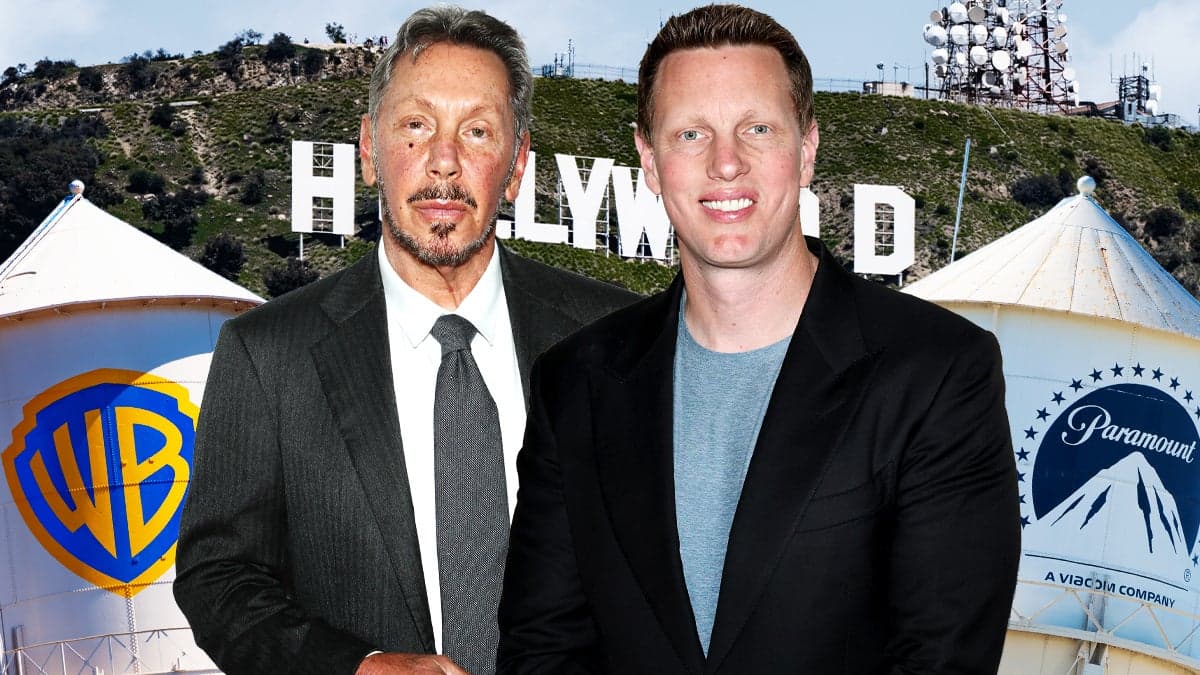
"Larry Ellison, the Oracle titan, is making a play for Paramount, aiming to merge it with Warner Bros. Discovery. This isn't just a merger; it's a power grab, a bet on the future of streaming and content, and a direct challenge to the established media order. Prepare for a tectonic shift as Ellison, a man known for his relentless ambition, reshapes the entertainment landscape."
Key Takeaways
- •Larry Ellison's strategic bet on content is a high-stakes play in the streaming wars.
- •The potential merger could create a content behemoth, challenging established players like Netflix and Disney.
- •The deal signifies a major shift in the entertainment landscape, driven by data, technology, and consolidation.
The Lede: The Siren Song of Sunset Boulevard
The air in Hollywood crackled with a nervous energy, thicker than the exhaust fumes choking the 405. The news, a whisper turning into a roar, echoed through the gilded corridors of studios and the hushed corners of power lunches: Paramount had upped the ante. And at the heart of the storm, a man as enigmatic as he is wealthy – Larry Ellison, the Oracle of Silicon Valley, was pulling the strings, a modern-day Medici wielding algorithms and billions instead of patronage and privilege. This wasn't just a deal; it was a declaration. A seismic shift in the tectonic plates of the entertainment industry, threatening to bury the old order and usher in a new era defined by data, disruption, and the singular vision of one man: Larry Ellison.
Picture this: a sun-drenched afternoon, the scent of jasmine clinging to the manicured lawns of Beverly Hills. Inside a lavishly appointed office, the phone rings, a piercing shriek that cuts through the carefully constructed silence. On the other end, the voice of an investment banker, the herald of a potential financial earthquake. Paramount, backed by Ellison's deep pockets and strategic genius, was making its move. The bid, a figure so staggering it could make even the most seasoned executive gasp, was a direct challenge, a gamble designed to reshape the very foundations of Hollywood.
The stakes? Astronomical. The potential for wealth and influence? Beyond measure. The risks? Equally daunting. This was a battle for survival in an industry grappling with disruption, a fight for control in a world where content is king and data is the crown jewels. Welcome, dear reader, to the heart of the storm.
The Context: A History Written in Red Ink and Streaming Wars
To understand the current chaos, one must journey back. Back to the genesis of the streaming wars, the rise and fall of empires, and the ruthless calculus of the entertainment business. The story begins, not with a bang, but with a whimper – a slow, agonizing realization that the old models were crumbling. The cable bundle, once the bedrock of media conglomerates, was bleeding subscribers. The theatrical experience, once sacrosanct, was being challenged by the convenience of the couch and the seductive power of the binge. The internet, the great democratizer, had become the ultimate disruptor.
Warner Bros. Discovery, a behemoth born from the merger of two media giants, initially appeared positioned to dominate. Boasting a library of content so vast it could fill the Grand Canyon, it seemed poised to ride the streaming wave to unparalleled success. Yet, the numbers told a different story. Mounting debt, bloated overhead, and a struggle to adapt to the rapidly evolving landscape began to chip away at its foundation. The streaming service, designed to be a cash cow, was instead a money pit, consuming billions with little to show for it.
Meanwhile, Paramount, despite its legacy and iconic brand, found itself in a similar predicament. Battling the headwinds of the industry, struggling to maintain its relevance in a market dominated by tech giants and deep-pocketed streamers. The studio, despite producing hits, was seen as vulnerable, ripe for the picking. This vulnerability, this weakness, is what Larry Ellison saw.
The players involved are numerous and complex. Shari Redstone, the controlling shareholder of Paramount, has been maneuvering to navigate the challenges. David Zaslav, the CEO of Warner Bros. Discovery, has been grappling with the realities of debt and the demands of Wall Street. And now, Ellison, the ultimate outsider, is crashing the party, armed with a war chest, a vision, and a determination that borders on the fanatical.
The parallels to other historical moments are striking. This feels like the late 1990s, when Steve Jobs returned to Apple. It's the period when consolidation and innovation merged to create something new. It's the time for bold moves, even if the price is steep. It's a time for radical disruption. The only question now: Is Ellison, the Oracle, capable of engineering a similar transformation?
The Core Analysis: Parsing the Numbers, Deciphering the Strategy
Let's talk numbers, shall we? This isn't just about creative storytelling; this is about cold, hard cash. The price tag for a Paramount-WBD merger is staggering, running into the tens of billions. Ellison’s backing doesn't just provide capital; it provides the strategic vision, the operational know-how, and the willingness to make ruthless decisions. This is where Ellison excels; he is a master of identifying undervalued assets, streamlining operations, and extracting maximum value. This is not philanthropy; this is calculated business.
The strategic rationale is equally compelling. Combining the content libraries of Paramount and Warner Bros. Discovery creates a content behemoth, a streaming powerhouse with the potential to rival Netflix and Disney. Think of it: the combined might of Paramount's franchises (Mission: Impossible, Star Trek), the extensive Warner Bros. library, and the trove of IP from HBO, DC Comics, and CNN. The resulting entity would possess an unparalleled volume of content, capable of attracting and retaining subscribers on a global scale. This is about building a war chest of content, a strategic offensive against the other streaming companies.
The key to success, however, lies in synergy. Cutting costs, eliminating redundancies, and streamlining operations are critical. Ellison is known for his relentless focus on efficiency and his willingness to make tough choices. This might mean layoffs, restructuring, and a shift in focus. The aim is to create an agile, data-driven organization capable of adapting to the ever-changing demands of the market.
The hidden agendas are equally intriguing. This is a land grab, a consolidation play. The winners, if the deal goes through, will be those who control the content, the platforms, and the distribution. The losers? Potentially, the smaller studios, the independent filmmakers, and anyone who can't adapt to the new reality. Wall Street will watch carefully, assessing both the immediate financial implications and the long-term strategic benefits.
The competitive landscape is already intense. Netflix, Disney, Amazon, and Apple are all battling for streaming dominance. This merger, if successful, could significantly alter the balance of power. The combined entity would have more ammunition to compete, more capital to invest in content, and more leverage to negotiate with distributors. The goal? To be the last man standing in a winner-take-all market. It is important to remember that Ellison is not here to play; he's here to win.
The Macro View: Reshaping the Entertainment Landscape
The implications of this deal extend far beyond the balance sheets. This isn't just a merger of two companies; it's a redefinition of the entertainment industry. This shift is part of a larger trend, a consolidation wave that is reshaping media, entertainment, and technology. From content creation to distribution, everything is in flux.
The rise of streaming has fundamentally altered the rules of the game. Traditional media companies are struggling to adapt to the new realities. The power has shifted from the studios to the streaming platforms, from the distributors to the content creators. This merger is a response to that shift, a desperate attempt to survive in a rapidly evolving market. It's a game of survival, a test of who can adapt the fastest. The key? Control, integration, and the ability to leverage data to create targeted content.
The impact on the consumer is uncertain. On the one hand, increased competition could lead to more content, more choices, and lower prices. On the other hand, consolidation could stifle creativity, reduce diversity, and lead to a homogenization of content. The consumer experience could be better, or it could be a collection of platforms controlled by a few powerful entities.
The implications for the creative community are even more complex. Consolidation can create opportunities, but it can also lead to fewer independent voices and more risk-averse decision-making. The future of independent filmmaking, the viability of art-house cinema, and the ability of new voices to break through are all at stake. The entertainment industry will need new and dynamic leaders.
Ultimately, this deal represents a critical juncture. It's a pivotal moment in the evolution of Hollywood, a test of whether traditional media can adapt and thrive in the digital age. It's a battle for control, a fight for survival, and a race to build the media empire of tomorrow.
The Verdict: The Oracle's Prognosis – A Content Titan's Ascent (or Descent?)
My verdict? This is a high-risk, high-reward play, a bold move by a man who has never been afraid to take chances. Larry Ellison, backed by his deep pockets and unwavering belief in his vision, is betting big on the future of entertainment. He is betting on the convergence of content and technology, on the power of data, and on the enduring appeal of great storytelling. This is a bet that could reshape the industry. This is Ellison's world. We're all just living in it.
The immediate impact, if the deal goes through, will be felt in the stock market, where shares of both Paramount and Warner Bros. Discovery will experience a rollercoaster ride. The cost-cutting measures, the layoffs, the restructuring will be headline news. The market will be watching to see if the synergies actually materialize. Investors, both institutional and individual, will be weighing risk and reward, trying to determine if Ellison’s vision can be translated into profit. The short-term picture? Volatile, unpredictable, and highly dependent on execution.
In five years, the landscape will likely be unrecognizable. A new content behemoth, perhaps the dominant player in the streaming wars, will emerge. Smaller players will be absorbed, consolidated, or simply disappear. Traditional media companies will be forced to adapt or die. The winners will be those who control the content, the platforms, and the data. The losers will be those who can't keep up with the pace of change.
In ten years? The entertainment industry will look very different. The old models will be gone, replaced by a new order driven by data, technology, and the relentless pursuit of profit. The lines between media, entertainment, and technology will be blurred. The power will be concentrated in the hands of a few global giants, each vying for supremacy. The consumer will have more choices than ever before, but the choices will be increasingly controlled by a handful of companies. The impact of AI, of virtual reality, and of augmented reality is uncertain, but it will be significant. The industry will need new talent, new vision, and new courage.
Will Larry Ellison succeed? It’s hard to say. The deal faces significant regulatory hurdles, the integration of two massive organizations will be a monumental task, and the entertainment industry is notoriously unpredictable. But one thing is certain: Larry Ellison never backs down from a fight. He sees opportunity where others see only chaos. He is a disruptor, an innovator, and a man who believes in his own vision above all else. In this context, his gamble on Paramount is the latest chapter in his remarkable career. Regardless of the outcome, it is a story that demands our attention. Fasten your seatbelts, Hollywood. The Oracle has spoken.