
Musk's Mockery: The San Francisco Blackout, Waymo's Troubles, and the Billion-Dollar Battle for Autonomy
"Elon Musk, ever the provocateur, seized on San Francisco's power outage to take a jab at Waymo, Google's autonomous driving project. This wasn't just a casual tweet; it was a calculated move in a high-stakes war for the future of transportation. This is about control, data, and the relentless pursuit of dominating the autonomous vehicle market, a market poised to be worth trillions. "
Key Takeaways
- •Elon Musk used the San Francisco blackout to criticize Waymo, exposing a potential weakness.
- •This is a strategic move in the ongoing battle for dominance in the trillion-dollar autonomous vehicle market.
- •The future of the industry is uncertain, but Musk’s actions indicate a shift in the landscape.
The Lede: Lights Out, Tempers Flare, and the Future of Driving at Stake
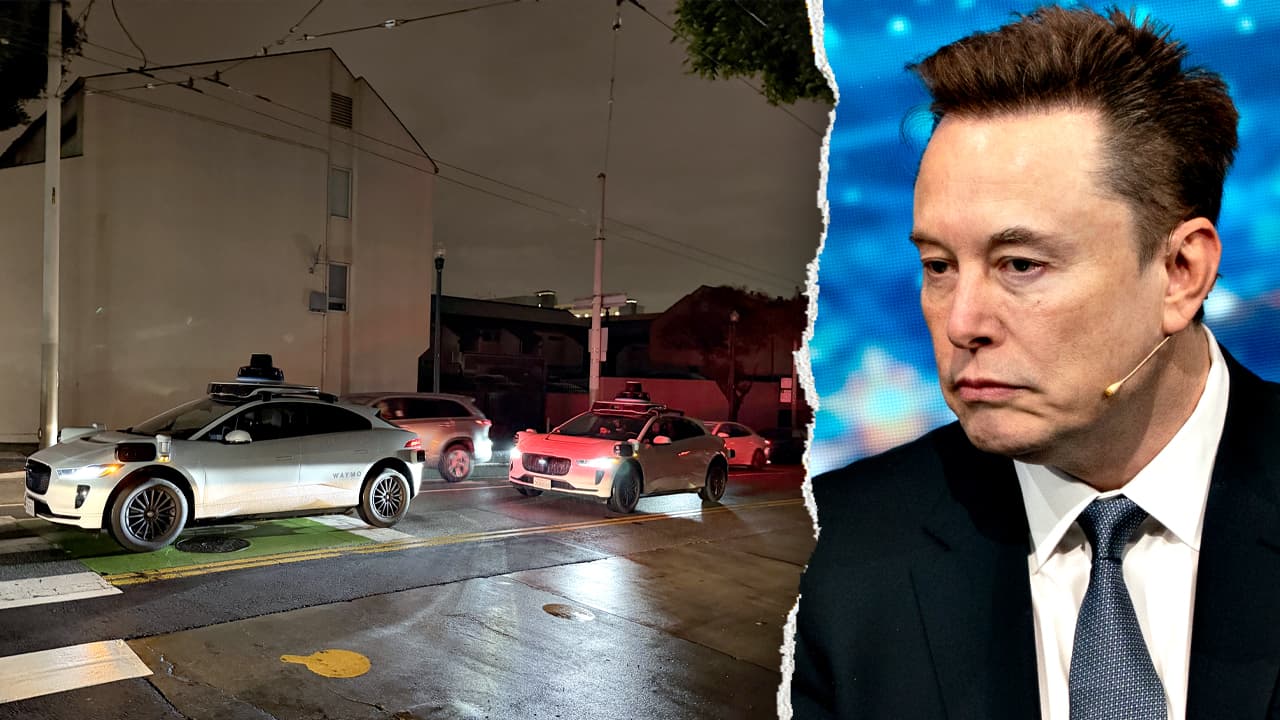
The city of San Francisco went dark. Not entirely, of course – this wasn’t some dystopian film. But in the heart of the tech-saturated city, a localized power outage sent ripples through the digital veins of the future. While residents grappled with dead cell phones and flickering screens, a different kind of drama was unfolding on social media. Elon Musk, the perpetual provocateur and CEO of Tesla, seized the moment. His target? Waymo, Google's self-driving car project, a direct competitor in the burgeoning autonomous vehicle arena. The blackout, a minor inconvenience for most, became Musk’s weapon of choice.
In a pointed, though not entirely surprising, tweet, Musk offered a sardonic commentary on Waymo's dependence on infrastructure, the very infrastructure that faltered, and that’s when the knives came out. Waymo's vehicles, reliant on a constant flow of power and data, were presumably rendered immobile, sitting ducks in the city's darkened streets. Musk, never one to miss an opportunity to highlight the perceived weaknesses of his rivals, couldn't resist a public jab. This wasn’t just a random online comment; it was a calculated strike in an ongoing war for dominance in the trillion-dollar autonomous vehicle industry. This is a game of chess, and Musk just made a check.
The Context: A History of Ambition and the Road to Autonomy
To understand the significance of Musk’s tweet, one must delve into the history of this intensely competitive landscape. Waymo, birthed from Google's self-driving car project, has long been viewed as a pioneer. Google, with its vast resources and technological prowess, invested billions in developing the technology. Waymo’s self-driving cars have logged millions of miles, navigating complex city environments and accumulating a wealth of data. They presented the world with a vision of a future where driving is a thing of the past.
Musk, on the other hand, entered the game with a different philosophy. Tesla, born from the electric vehicle revolution, has always seen autonomy as an integral part of its mission. Musk's approach, however, has often been characterized by ambitious timelines, bold claims, and a reliance on a technology stack that has, at times, faced skepticism. While Waymo has favored a cautious, meticulously planned approach, built on detailed mapping and redundancy, Tesla has pushed a more agile strategy, embracing advanced driver-assistance systems (ADAS) as a stepping stone to full autonomy. Tesla's approach is more reliant on neural networks and over-the-air software updates.
The rivalry between Tesla and Waymo goes beyond technological differences. It’s a battle of ideologies, business models, and corporate cultures. Waymo represents the established tech giant, leveraging its deep pockets and its data. Tesla embodies the disruptive innovator, willing to take risks and challenge conventional wisdom. Musk’s persona, a blend of visionary and provocateur, adds another layer of complexity. His every utterance is scrutinized, analyzed, and amplified by the media, making him a central figure in this narrative.
The stakes are astronomical. The autonomous vehicle market is projected to be worth trillions of dollars in the coming decades. The company that successfully cracks the code of full autonomy – the one that creates a truly safe, reliable, and commercially viable self-driving system – will reap unimaginable rewards. The competition is not just about technology; it's about control of the future of transportation, the data it generates, and the industries it will disrupt.
The Core Analysis: Numbers, Narratives, and the Hidden Agendas
Musk's tweet was more than a mere boast. It was a strategic maneuver. By highlighting the vulnerability of Waymo's system to a commonplace event like a power outage, he exposed a potential weakness in their core business model. Waymo’s approach, as it stands, is heavily reliant on a complex infrastructure network. They need constant access to data, power, and precise mapping, any failure of this could create serious limitations. Musk positioned Tesla's approach as being more resilient, more adaptable, and therefore, more appealing to investors and consumers. He implicitly suggested that Tesla's reliance on its vehicle’s own sensors and AI, combined with its over-the-air software update capabilities, offered a more robust path to autonomy.
The financial implications are enormous. Investors are constantly evaluating the potential of these companies. A perception of weakness, such as the one Musk attempted to create, can lead to a drop in valuation, a decrease in funding, and, ultimately, a loss of market share. This isn't just about a one-off event; it's about shaping the narrative, controlling the perception of these companies' capabilities, and influencing the flow of capital.
Digging deeper, consider the hidden agendas. Waymo is part of the Alphabet conglomerate, a company with enormous reach and influence. Tesla, on the other hand, is a standalone entity, dependent on its own success. This creates a fundamental difference in their approach to risk and reward. Waymo can afford to take a slower, more deliberate approach, testing its technology meticulously and building a robust safety record. Tesla, by contrast, must move faster, constantly pushing the boundaries of its technology to satisfy investors and maintain its competitive edge.
The data itself is a critical battleground. Autonomous vehicles generate vast amounts of data, everything from road conditions and traffic patterns to driver behavior and passenger preferences. The company that controls this data will have a significant advantage in refining its algorithms, improving its safety, and developing new products and services. Musk understands the value of this data and Tesla’s approach ensures it controls the full data stack. This data is the currency of the future and the company that holds the most will likely win.
Musk also understands the power of perception. His tweet, amplified by social media and the tech press, could influence public opinion. The perception that Tesla's technology is superior, more reliable, and less susceptible to external vulnerabilities could translate into increased sales, greater brand loyalty, and a higher market valuation. It’s about building a narrative, a story that resonates with investors and consumers alike.
The Macro View: Reshaping the Landscape
This episode, while seemingly small, is a microcosm of a much larger shift. The autonomous vehicle industry is at a pivotal moment. The initial hype and expectations have begun to collide with the realities of technological development. The challenges of full autonomy are proving more complex than initially anticipated. Safety concerns, regulatory hurdles, and public skepticism are slowing down the pace of progress. The blackout incident and Musk's reaction to it serve as a wake-up call, highlighting the vulnerabilities and limitations of existing systems.
The implications are far-reaching. The incident could accelerate the consolidation of the industry. Smaller players, lacking the resources and the technological prowess of companies like Tesla and Waymo, may struggle to survive. Partnerships and acquisitions could become more common, as companies seek to pool their resources and share the risks. The race for dominance could become a winner-take-all scenario, where only a few companies emerge as the leaders.
The regulatory landscape is also likely to evolve. Governments around the world are grappling with the challenge of regulating autonomous vehicles. The debate over safety standards, data privacy, and liability will intensify. The companies that can demonstrate the highest levels of safety and reliability will be best positioned to navigate these complex regulatory waters. This incident highlights the need for robust safety measures and fail-safe systems.
The impact on the automotive industry will be transformative. The traditional automotive manufacturers, already facing the disruption of electric vehicles, will have to adapt to the advent of autonomous driving. Those that can't compete may disappear entirely. The lines between automakers, tech companies, and service providers will blur, creating new business models and innovative partnerships. The future of transportation will be redefined.
The infrastructure of cities will also need to adapt. Cities will need to invest in the infrastructure required to support autonomous vehicles, including high-speed internet, advanced mapping systems, and charging stations. The smart city concept, which envisions cities that are more efficient, sustainable, and livable, will become a reality. The power grid will have to be more reliable.
The Verdict: Crystal Ball Gazing – A Decade of Disruption
My seasoned judgment, honed by decades of observing the tech industry, is this: Musk’s jab at Waymo is more than just a momentary spark. It’s a sign of a looming and consequential battle. While Waymo has the resources and the head start, Tesla, under Musk's relentless ambition, is a formidable competitor. Expect a series of such incidents, public barbs, and strategic maneuvers as these companies continue to vie for dominance. The future of autonomous driving will be a bumpy road, filled with challenges, setbacks, and unexpected twists.
1-Year Outlook: Expect more regulatory scrutiny. Waymo will likely double down on its safety and redundancy measures. Tesla will continue to push the boundaries of its technology, while also working to refine its approach to safety. The public narrative will be shaped by data, incidents (both successes and failures), and the relentless spin of both companies.
5-Year Outlook: The market will likely become more polarized. The leading companies will start to pull away from the pack. Expect partnerships and acquisitions to accelerate. The safety debate will continue to rage, but the technology will improve significantly. A few key players, and not necessarily the ones leading today, will control the majority of the market share. Expect the value of Tesla to remain highly volatile.
10-Year Outlook: Autonomous vehicles will become commonplace in many parts of the world. The impact on the automotive industry, cities, and the economy will be profound. The companies that are currently leading the charge will probably look different – the landscape is always changing. The battle will be not just for the road, but for the soul of transportation itself. Expect the unexpected – this industry will be defined by its constant disruption and innovation. Musk's tweet may be remembered as a turning point, a signal of the fierce competition to come in a new era.
The San Francisco blackout was a blip on the radar. But in the world of autonomous vehicles, it was a shot across the bow. Musk, ever the visionary, understood this perfectly. He is betting on the future, and right now, the bet is on Tesla. Whether he wins remains to be seen. But one thing is certain: he’s not afraid to play dirty, and the game is just getting started.