
Jensen Huang: The $3 Trillion Architect of the AI Revolution - And the Future of Everything
"Nvidia's meteoric rise, culminating in Jensen Huang's 'Person of the Year' title, signals a tectonic shift in the global economy. This isn't just about chips; it's about the keys to the future – AI, data, and the very fabric of innovation. Expect massive consolidation, unprecedented disruption, and a world remade in Huang's silicon image."
Key Takeaways
- •Nvidia's meteoric rise is driven by its dominance in AI chips, fueled by Jensen Huang's vision and strategic execution.
- •The company's success is reshaping the global economy and industrial landscape, with far-reaching implications for various sectors.
- •Looking ahead, Nvidia is positioned for continued dominance, expansion, and potential consolidation, with significant long-term impact.
The Lede: The Ascent to Olympus
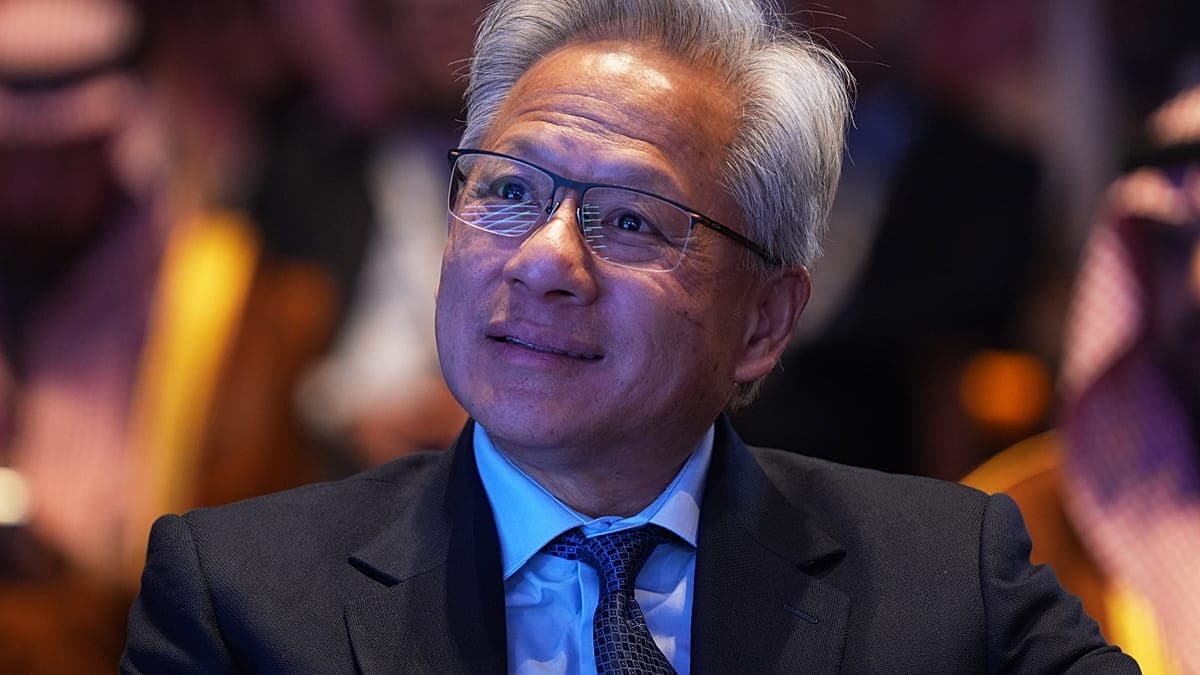
The flashing cameras, the roar of the crowd, the blinding flash of the shutterbugs. No, this isn't a Hollywood premiere, though the star wattage is certainly comparable. This is the stage at the Financial Times, London, and the man basking in the glow is not a silver screen icon, but Jensen Huang, CEO of Nvidia. As the champagne corks pop, and the digital ticker tape scrolls the news – ‘FT Names Nvidia CEO Jensen Huang as their 2025 Person of the Year’ – a new chapter in the history of technology, and indeed, civilization, has officially begun.
The air crackles with anticipation. The whispers, previously confined to the rarefied atmosphere of venture capital boardrooms and the hushed tones of Wall Street trading floors, have now become a deafening roar. Huang, a man known for his black leather jackets and unwavering vision, stands at the apex, the architect of a technological revolution that’s reshaping the world at warp speed. He’s not just selling chips; he’s selling the future – a future powered by artificial intelligence, data, and the relentless pursuit of innovation.
This isn't just another award. This is recognition of the dawn of a new era. The FT, with its impeccable record of calling the shots, has effectively declared that the AI age is upon us, and Jensen Huang is its unchallenged emperor. The implications are staggering, the opportunities boundless, and the risks…well, they're equally as monumental.
The Context: From Gaming to Global Domination
To understand Huang's ascension, we must rewind the clock. Back to the late 1990s, when Nvidia was just another player in the nascent graphics card market. In a market dominated by the likes of 3dfx and SGI, Huang, with his co-founders Chris Malachowsky and Curtis Priem, saw something different. He saw the potential for a new kind of computing power, one that could unlock the immersive experiences of gaming and the power of parallel processing.
This insight, this unwavering belief in the power of the GPU (Graphics Processing Unit), was the genesis of Nvidia. While others focused on the CPU (Central Processing Unit), the brains of the computer, Huang bet the farm on the GPU – a specialized processor designed to handle complex graphical calculations. It was a contrarian bet, a gamble on a technology that was, at the time, viewed as niche. But Huang’s vision proved prescient. The gaming market exploded, and Nvidia’s GPUs became the gold standard, powering the most demanding games and creating breathtaking visual experiences.
However, Huang wasn’t content with just dominating the gaming world. He saw the GPU’s potential beyond pixels and polygons. He recognized that the parallel processing capabilities of the GPU could be harnessed for a much grander purpose: artificial intelligence. This was the pivotal moment, the 'aha' moment that would catapult Nvidia from a gaming company to a global technology powerhouse. It was a leap of faith, a strategic pivot that redefined the company's trajectory and, arguably, the future of computing.
Huang, ever the visionary, poured billions into research and development, relentlessly pushing the boundaries of GPU technology. He courted and cultivated relationships with the world's leading researchers, data scientists, and AI developers. He understood that the future wasn't just about hardware; it was about the ecosystem, the software, the algorithms, and the talent that would breathe life into the silicon. This holistic approach, this relentless focus on the entire AI stack, is what sets Nvidia apart.
The company aggressively pursued partnerships, acquisitions, and strategic investments, building a moat around its core technology. The acquisition of Mellanox in 2019, a company specializing in high-performance networking solutions, was a masterstroke, allowing Nvidia to control the entire data center infrastructure, from the processors to the interconnects. The deal solidified Nvidia's position in the AI race. Deals like this, and a steady stream of others, demonstrate a long-term strategy that is both bold and calculated.
This relentless pursuit of innovation and strategic dominance has culminated in Nvidia’s current dominance. Today, Nvidia’s GPUs are the engines driving the AI revolution, powering everything from self-driving cars and medical breakthroughs to the generative AI models that are transforming industries. The company's market capitalization has soared, making Huang a multi-billionaire and Nvidia one of the most valuable companies in the world. But this is just the beginning.
The Core Analysis: The Anatomy of a Technological Empire
The numbers tell a compelling story. Nvidia's revenue growth has been nothing short of explosive. The company’s data center business, the engine driving its current expansion, is experiencing astronomical growth rates. Profit margins are fat, and the backlog of orders is staggering. This isn't just a cyclical boom; it’s a structural shift. The demand for Nvidia’s AI chips is outpacing supply, creating a bottleneck that has the entire tech world scrambling for access.
The winners in this new world order are clear. Nvidia is the undisputed king, benefiting from its first-mover advantage, its superior technology, and its strategic partnerships. The early investors, the venture capitalists who took a chance on Huang, are reaping the rewards. The engineers, the researchers, and the developers who have contributed to Nvidia’s success are riding the wave. The entire tech ecosystem, from cloud providers to software developers, is being reshaped by Nvidia's dominance.
But there are also losers. The traditional CPU manufacturers, like Intel, are scrambling to catch up, facing the reality of a world where the GPU reigns supreme. The companies that failed to anticipate the AI revolution are now playing catch-up, pouring billions into research and development in a desperate attempt to stay relevant. The smaller players, the startups that once hoped to disrupt the industry, are finding it increasingly difficult to compete with Nvidia’s scale and resources. It's a high-stakes game of survival of the fittest.
Hidden agendas are everywhere. The geopolitical implications are profound. Nvidia's chips are not just commodities; they're strategic assets. The US government is closely scrutinizing Nvidia's exports to China, recognizing the potential for these chips to be used for military and surveillance purposes. The battle for technological supremacy is intensifying, and Nvidia is at the epicenter.
The psychology of Huang is crucial. He is a man driven by an insatiable curiosity, a relentless work ethic, and an unwavering belief in his vision. He’s not afraid to take risks. He's a master storyteller, a charismatic leader who can inspire his employees, his investors, and the world. He's also incredibly competitive, with a burning desire to win. This combination of traits is what has enabled him to build a technological empire.
The financial incentives are enormous. The stakes are in the trillions of dollars. The future of the global economy hinges on the development and deployment of AI, and Nvidia is at the forefront. The company's success will have a ripple effect, creating new industries, new jobs, and new opportunities. But it will also create new challenges, new risks, and new inequalities. The world is watching.
The "Macro" View: Reshaping the Industrial Landscape
The impact of Nvidia’s ascent extends far beyond the tech sector. It's reshaping the entire industrial landscape. The automotive industry, for example, is undergoing a profound transformation, with self-driving cars requiring massive computing power. Nvidia is the dominant player in this space, partnering with automakers around the world. The healthcare industry is also being revolutionized by AI, with Nvidia's chips powering medical breakthroughs and accelerating drug discovery. Finance, entertainment, and even agriculture are being transformed by AI, and Nvidia is at the center of it all.
This shift echoes historical moments. This moment echoes Jobs in '97, or Gates in the late 70s. This is the moment when a company, and a single visionary, redefine the world around us. There is something truly fundamental changing, and Huang is the key.
The implications for the global economy are immense. The countries that embrace AI and adopt Nvidia's technology will have a significant competitive advantage. The countries that lag behind risk being left behind. The competition for talent, resources, and market share will intensify. The world is entering a new era of technological competition, and Nvidia is at the heart of it.
The impact will be felt across every aspect of our lives. From the way we work and communicate to the way we travel and consume, AI will transform everything. Nvidia is not just a company; it is the enabler of this transformation. It's building the tools that will shape the future, and its influence will be pervasive.
The Verdict: The Next Decade and Beyond
Looking ahead, it's clear that Jensen Huang and Nvidia are not just at the forefront of a trend; they are the trendsetters. The next decade will be defined by the relentless pursuit of AI and the companies that supply its power. Here's a glimpse into the future:
1-Year Outlook: Expect continued dominance. Nvidia's market share will remain strong. New chip releases will further solidify its technological lead. The company will continue to forge strategic partnerships, expand into new markets, and invest heavily in research and development. The stock price will likely continue to climb, but volatility is inevitable. The scrutiny from regulators and competitors will intensify, as will the public interest in the ethics and impact of AI.
5-Year Outlook: Consolidation and diversification. Nvidia will likely acquire smaller competitors and expand its product portfolio to include software and services. It will face increasing competition from Intel, AMD, and emerging players in the AI chip market. The company will expand into new areas, such as robotics, healthcare, and quantum computing. The regulatory landscape will evolve, with governments around the world implementing new rules and regulations to govern the use of AI. Ethical considerations will become increasingly important, and Nvidia will need to demonstrate its commitment to responsible AI development.
10-Year Outlook: A new global power. Nvidia will be a dominant force in the global economy. Its technology will be woven into the fabric of society, powering everything from our homes and our cities to our cars and our healthcare systems. The company will face new challenges, including the rise of new technologies and the potential for disruptive innovations. Huang will likely transition to a more strategic role, empowering a new generation of leaders. The legacy of Nvidia and Jensen Huang will be secure, as the architects of an era that redefined the boundaries of human potential.
The path forward won't be without challenges. The technological landscape is constantly evolving, and new innovations will undoubtedly emerge. Competition will intensify, and the pressure to stay ahead will be relentless. The risks of over-reliance on a single company are also evident, and the potential for market disruption is ever-present. Huang, however, seems well-prepared for whatever challenges the future may bring. He has built a company that is not just resilient but also adaptable, innovative, and driven by a singular vision: to shape the future of computing.
Jensen Huang, FT’s Person of the Year, has not just built a company; he has built a future. A future that is rapidly unfolding, a future powered by silicon, and a future where the possibilities, like the AI engines he builds, are truly limitless.