
Inditex Soars: The Zara Empire Rewrites Fashion's Rules, Leaving Rivals in the Dust
"Inditex, the parent company of Zara, has hit an all-time high, reaching a staggering €174 billion market capitalization. This isn't just a win; it's a declaration. A seismic shift is underway, and those still clinging to outdated models are about to be swept away by the Zara juggernaut."
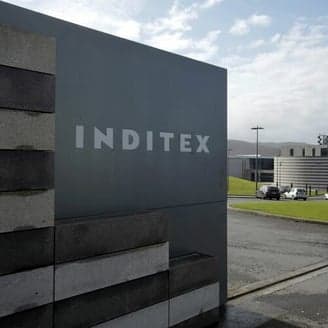
Key Takeaways
- •Inditex's market capitalization hits an all-time high, signaling a new era in the fashion industry.
- •The company's data-driven design, efficient supply chain, and strategic retail approach are key drivers of its success.
- •Inditex's dominance will reshape the fashion landscape, forcing competitors to adapt or risk irrelevance.
The Lede: The Runway to Riches
The Plaza de la Lealtad in Madrid, usually a haven of quiet reflection, felt different this week. The air, typically thick with the scent of roasted chestnuts and hushed business deals, crackled with a distinct buzz. The culprit? Inditex, the Galician behemoth that controls Zara, Pull&Bear, and a constellation of other fast-fashion brands, had just crested an unprecedented peak. The Spanish stock market, usually a steady if unspectacular performer, was alight. Digital ticker displays blazed the news: €174 billion. An all-time high. A figure that resonated far beyond the Iberian Peninsula, echoing across the hallowed halls of Wall Street, and the trendsetting streets of Milan and Paris.
This wasn't just a good quarter; this was a coronation. A signal that in an industry defined by its fickle nature, Inditex, under the shrewd and often enigmatic leadership (or lack thereof, depending on the day) of its top executives, had not only survived but thrived. The echoes of past fashion empires, once seemingly impregnable, now felt distant. Those empires, consumed by bloated supply chains, slow response times, and an inability to anticipate the seismic shifts in consumer behavior, are now footnotes in a new era. This is Inditex's world. We're just living in it.
The champagne corks popped in Arteixo, the company's headquarters, but the celebration was measured. The Inditex way is not one of flamboyant displays of wealth; instead, it is a relentless, almost monastic, focus on the details. The real victory wasn’t the number; it was the validation of a strategy so brutally efficient, so ruthlessly data-driven, and so deeply embedded in the realities of the modern consumer that it has become nearly impossible to compete with.
The Context: From Humble Beginnings to Global Dominance
To understand Inditex's current ascendancy, one must journey back to its origins. The story begins, as many great business narratives do, with a single, shrewd observation. In the mid-1970s, Amancio Ortega, the company's founder, noticed a gap in the market: consumers craved fashionable clothing at accessible prices. He capitalized on this insight, and using his family's small textile factory, he crafted garments, quickly recognizing the inefficiencies of traditional retail. His genius was not simply in design; it was in the entire system. He pioneered the concept of "fast fashion," a model where new designs hit stores at lightning speed, mirroring runway trends but at affordable prices.
This early innovation wasn't just about speed. Ortega, a master of supply chain management, built a lean, agile network, primarily centered in Spain and Portugal, to achieve it. He avoided the industry's reliance on distant, often exploitative, manufacturing hubs. He owned much of his production and crucially controlled the flow of information – the holy grail of fashion – directly from stores to the design teams. This model enabled unprecedented responsiveness. It was a game-changer.
The ensuing decades saw a relentless expansion. Zara became the flagship brand, but Inditex's strategy was not solely tied to Zara. Ortega and his team recognized the value of diversification. Pull&Bear, Bershka, Stradivarius – each brand served a distinct demographic, covering every style and price point imaginable. The portfolio approach allowed Inditex to capture a larger share of the market, insulating itself from fluctuations in any single segment. Moreover, they perfected their real estate strategy, securing prime locations in major cities, further enhancing brand visibility and accessibility.
Yet, even amidst relentless expansion, the company faced significant challenges. The 2008 financial crisis tested their model as consumer spending plummeted. Competition from emerging markets, and the relentless rise of online giants like ASOS, threatened to disrupt their physical retail dominance. Those who predicted Inditex's demise in the face of these changes underestimated the company's core strength: its adaptability.
The evolution from the Ortega era to the current leadership represents a period of necessary evolution and adaptation, building upon a strong foundation while being challenged by external forces. There's been a clear push toward enhanced digital integration, even as Inditex has maintained its strong presence in brick-and-mortar retail.
The Core Analysis: The Anatomy of a Fashion Behemoth
The €174 billion market capitalization is not merely a number; it is a testament to Inditex's meticulous execution. Let's delve into the key drivers behind this remarkable achievement:
- The Data-Driven Design Machine: Inditex doesn't guess trends; it anticipates them. Real-time sales data from its global network of stores informs design decisions. The company's designers, the unsung heroes of this operation, are constantly updating collections based on what's flying off the shelves and what's gathering dust. This system creates a feedback loop, eliminating slow-moving inventory and minimizing markdowns. The speed from concept to store is now measured in weeks, rather than months, setting a world record in the fashion industry. This echoes the brutal efficiency that made Henry Ford a legend.
- The Supply Chain Supremacy: Inditex's supply chain is a marvel of efficiency. Much of its production remains close to its headquarters in Spain, which gives it unparalleled control over quality, speed, and responsiveness. This contrasts sharply with the vast, unwieldy supply chains of many competitors who are reliant on factories in far-flung, often less-than-ideal, locations. Inditex's localized approach allows them to react quickly to changing trends and minimizes shipping costs and delays.
- The Real Estate Gambit: Prime retail locations are the lifeblood of physical retail, and Inditex has mastered the art of securing them. They target high-traffic areas in major cities, ensuring maximum visibility and accessibility. While others were closing stores during the pandemic, Inditex was quietly negotiating leases, positioning itself for a powerful rebound when the world reopened. Their faith in physical retail is a defining characteristic of their strategy.
- The Digital Leap: While traditionally a brick-and-mortar powerhouse, Inditex has invested heavily in its digital infrastructure. They understand that online is not a threat but an extension of their physical stores. They offer seamless online shopping experiences, efficient delivery options, and sophisticated data analytics to understand consumer behavior. Their online sales continue to grow significantly, representing an ever-larger piece of the pie.
- The Leadership Vacuum: Who is leading Inditex? That is the real question. With the recent CEO transition, the company is effectively without a guiding hand. This is either a moment of brilliant execution, where everything is running like a well-oiled machine, or a ticking time bomb. Only time will tell.
The winners in this scenario are clear: Inditex shareholders, the company's dedicated employees, and the consumers who benefit from affordable, stylish clothing. The losers are the competitors who haven't adapted, who are burdened by outdated strategies, and slow-moving supply chains. Brands like H&M, Gap, and many others, are struggling to keep pace, forced to slash prices and close stores, playing a constant game of catch-up. They are victims of their own inflexibility.
The hidden agendas? There are always hidden agendas. Some analysts speculate that Inditex might be eyeing acquisitions to further consolidate its position. Others believe that the company may be preparing for expansion into new markets, leveraging its proven formula for success. The lack of a strong leadership voice also leaves a void for potential raiders.
The "Macro" View: Reshaping the Fashion Landscape
Inditex's success is not an isolated event; it is a symptom of a broader shift in the fashion industry. The old rules no longer apply. The days of fashion seasons dictated by high-fashion houses are over. Consumers now demand instant gratification, constant innovation, and accessible prices. The rise of social media and online influencers has accelerated the pace of trends, making the industry even more volatile and fast-paced.
Inditex is not just adapting to these changes; it is driving them. By mastering the art of fast fashion, they've set a new standard. Competitors must either embrace their model or risk becoming irrelevant. This moment echoes the shift in the music industry when Apple launched the iPod. The old model of record stores and long-term contracts was obliterated. Inditex has similarly upended the fashion supply chain. They control the narrative, from design to the store, in a manner that will force others to scramble to catch up.
The environmental impact of fast fashion is a complex issue. The industry is under increasing scrutiny for its unsustainable practices, including water usage, textile waste, and labor conditions. Inditex, aware of this, is investing in sustainable materials and processes, but the inherent nature of fast fashion still creates enormous environmental challenges. This is the moral tightrope Inditex must walk.
The impact of Inditex's ascent will be felt across the industry: from designers to retailers, from suppliers to consumers. Consolidation is inevitable. Expect to see smaller brands struggle to survive. The competition for prime retail space will intensify. The pressure to innovate, both in design and in supply chain management, will be relentless. Inditex has set a new pace, and everyone else must learn to run.
The Verdict: The Future is Fast, and Inditex is in the Driver's Seat
My seasoned judgment, after decades of covering markets, is this: Inditex's dominance is far from over. In the short term (1 year), the company will continue to see strong revenue and profit growth. They will expand into new markets, refine their online presence, and further optimize their supply chain. The lack of a clear leadership voice may create some internal friction, but the strength of the underlying model will likely overcome such issues. They’ll continue to play offense. They will not be playing defense.
Over the next five years, Inditex will become even more dominant. Expect strategic acquisitions, partnerships with innovative technology companies, and a greater emphasis on sustainability. The company's brand portfolio will continue to evolve, catering to an increasingly diverse consumer base. Their grasp on the supply chain is a huge advantage. Their retail strategy is a model for physical and digital integration.
Looking ahead a decade, Inditex will likely be one of the most valuable companies in the world. They will face challenges from new entrants and shifting consumer preferences, but their agility and adaptability will be their greatest assets. They will transform into a truly global company. Their global brand will be unmistakable. Their brand will transcend the simple definition of “fashion.” They’ve already set a new bar. Everyone else is playing catch up.
This is not just a story about a company; it's a story about the future of an industry. And right now, the future belongs to Inditex. The Zara Empire is just getting started.